


Your skin can be the first place your body asks for help. When breakouts keep returning, rosacea flares without warning, or eczema refuses to settle no matter what you put on it, the real issue may not be sitting on the surface at all. Understanding how gut health affects skin can change the way you approach healing, because the skin is often reflecting what is happening deeper in the body.
This is where so many people feel frustrated. They have tried creams, prescriptions, facials, elimination diets, expensive skincare, and still the inflammation comes back. That usually means the body is asking for a root-cause approach, not another temporary fix.
How gut health affects skin from the inside out
The gut and the skin are in constant communication. This is often called the gut-skin axis, and it matters more than many people realise. Your digestive system helps regulate inflammation, immune activity, nutrient absorption, hormone clearance, and detoxification. Every one of those processes can influence the condition of your skin.
When the gut is functioning well, it helps create balance. You absorb the nutrients needed for skin repair, your immune system is less reactive, and inflammatory load tends to stay lower. When gut health is under strain, the opposite can happen. The skin may become redder, itchier, more reactive, oilier, drier, or slower to heal.
For some people this shows up as acne around the jawline, for others it may be rosacea flushing, psoriasis plaques, eczema patches, or a general sense that the skin has lost its calm. The presentation differs, but the pattern is familiar. The body is overloaded, inflamed, or out of balance, and the skin is speaking on its behalf.
Why the gut can trigger skin issues
There is rarely one single cause behind a chronic skin condition. More often, there are layers. Gut dysfunction can be one of the most important layers because it affects several systems at once.
A disrupted gut microbiome is one common piece of the puzzle. Your microbiome is the community of bacteria and other microbes living in the digestive tract. When that balance shifts, it can influence immune responses and inflammatory pathways. Some people notice this after repeated antibiotics, long-term stress, poor sleep, alcohol excess, highly processed foods, infections, or years of digestive issues that were never properly addressed.
Another factor is intestinal permeability, often described as leaky gut. This term gets thrown around carelessly online, but the basic idea is simple. When the gut lining becomes irritated or compromised, unwanted particles can cross into the bloodstream more easily, which may contribute to immune activation and inflammation. In someone already prone to eczema, rosacea, or autoimmune skin conditions, this can become a significant aggravating factor.
Then there is nutrient absorption. Your skin needs zinc, essential fatty acids, vitamin A, vitamin D, B vitamins, amino acids, and antioxidants to repair and regulate itself well. If digestion is poor, stomach acid is low, or the gut lining is inflamed, you may be eating well but still not absorbing what your body needs.
Hormones also come into the conversation. The gut plays a role in metabolising and eliminating hormones, particularly oestrogen. If the gut is sluggish or imbalanced, hormone recirculation can contribute to breakouts, congestion, and cyclical flare-ups. This matters greatly for women navigating perimenopause, menopause, PCOS, and long-standing hormonal acne.
Skin signs that may point back to the gut
Not every skin issue starts in the gut, but certain patterns make it worth investigating.
If your skin flares alongside bloating, constipation, reflux, loose stools, food reactions, or abdominal discomfort, there is a strong chance the digestive system is involved. If your skin worsens during stress, after antibiotics, after a big period of poor eating, or when hormones are all over the place, the gut may be part of the chain reaction.
People with rosacea often notice digestive symptoms sitting quietly in the background. Those with eczema may also have food sensitivities, immune overreactivity, or a history of gut disturbance. Acne can be linked to hormones, yes, but inflammation, insulin dysregulation, sluggish elimination, and microbiome imbalance can all add fuel to the fire.
This is why a surface-level treatment plan can fall short. If you only suppress the symptom without asking why the body is inflamed in the first place, the skin often stays stuck in a cycle.
How to support the gut when your skin is inflamed
If you want to change how gut health affects skin, the goal is not to chase trends or copy someone else’s protocol from social media. It is to support the body in a way that is personalised, steady, and realistic.
The first step is removing obvious aggravators. That may include ultra-processed foods, excess sugar, too much alcohol, inflammatory oils, or foods that clearly trigger symptoms for you. This does not mean every person with a rash needs a highly restrictive diet. In fact, over-restriction can create more stress and make healing harder. It depends on the person, the condition, and how reactive the system is.
The next step is improving digestion itself. That can mean slowing down at meals, chewing properly, reducing stress while eating, and supporting stomach acid and bile flow where appropriate. These simple foundations are often overlooked, yet they matter. A healthy gut is not just about what you eat. It is also about what you break down, absorb, and eliminate.
Repairing the gut lining may also be part of the picture, especially in people with long-standing inflammation, food reactivity, or autoimmune patterns. This usually involves a practitioner-guided plan using food as medicine, targeted nutrients, and herbs chosen for the individual rather than a generic supplement stack.
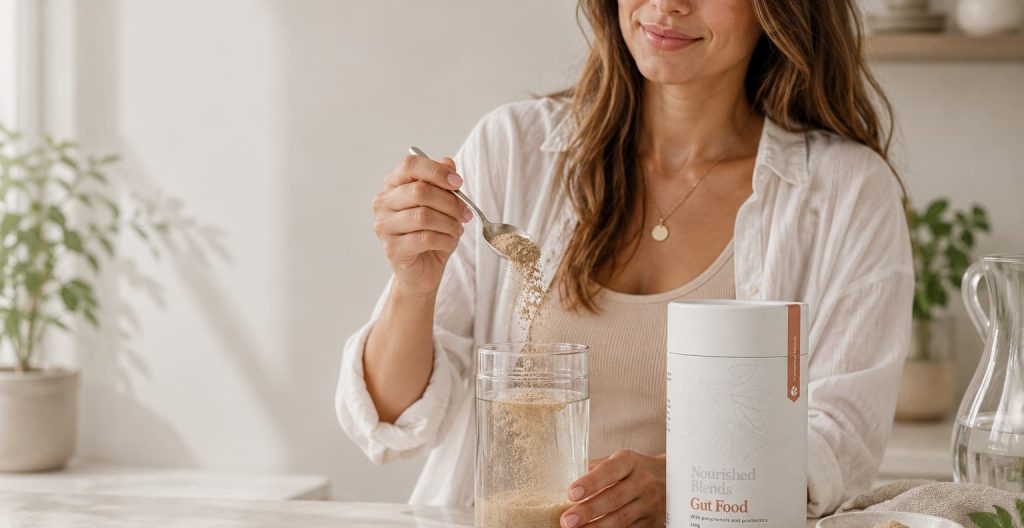
Depending on the individual, practitioners may also recommend targeted gut-support nutrients to help nourish the digestive tract and support tissue repair. Products such as Gut Food Powder 250g and BioPure Collagen Protein 400g are commonly used as part of a comprehensive gut-healing approach.
Rebuilding the microbiome can be powerful too, but this is where nuance matters. Probiotics are not always the right first step. Some people do beautifully with them. Others, particularly those with histamine issues, SIBO, or very sensitive digestion, may feel worse. This is why cookie-cutter advice often fails. The body needs the right support in the right order.
When probiotic support is appropriate, choosing the right strain can make a significant difference. Depending on symptoms and health history, options such as Biome Acne Probiotic (30 VegeCaps) or Biome Eczema Probiotic 30 Vanilla Sachets may be considered as part of an individualised treatment plan.Stress, the nervous system, and the gut-skin connection
One of the biggest missing pieces in skin healing is the nervous system. Stress does not just live in the mind. It changes digestion, alters the microbiome, weakens repair, affects hormones, and raises inflammatory chemicals that can aggravate the skin.
In addition to lifestyle and nervous system support, nutritional cofactors may help the body manage stress and inflammation more effectively. Products such as Activated B Complex 60 Capsules and Zinc Protect 60 Tablets are commonly used to support energy production, immune balance, and skin repair processes.
You can eat all the right foods, but if your body is stuck in a constant fight-or-flight state, healing is slower. Many women dealing with chronic skin issues have been carrying stress for years while trying to function, care for everyone else, and keep pushing through. The body eventually starts to speak louder.
This is why real healing often requires more than a food list. It may include nervous system support, better sleep, emotional processing, mineral replenishment, adrenal support, and space for the body to come out of survival mode. That is not fluffy wellness language. It is physiology.
Why a root-cause approach gets better results
When people finally understand how gut health affects skin, something shifts. They stop seeing their skin as the enemy and start seeing it as information. That mindset matters, because it opens the door to proper investigation.
A root-cause approach looks at the full picture – gut function, microbiome balance, inflammation, hormones, nutrient status, liver load, immune activity, stress, and lifestyle triggers. It recognises that two people with the same diagnosis may need very different support.
For one person, the driver may be post-antibiotic gut disruption. For another, it may be perimenopausal hormone shifts combined with poor detoxification and constipation. For someone else, chronic stress and hidden food intolerances may be keeping the immune system on edge. The skin condition may share a name, but the healing pathway is not always the same.
This is the heart of naturopathic care. If you find the cause, you find the cure. Not in an overnight, miracle-promise kind of way, but in a deep and lasting way that respects the wisdom of the body.
If you are on the Sunshine Coast or working with a practitioner remotely, this is where individualised care can make all the difference. A thoughtful plan can help calm the fire underneath the symptom rather than just covering it up.
Your skin is not failing you. It may be revealing that your gut, hormones, immune system, or stress load need attention. When you listen to those signals and support the body properly, the skin often begins to soften, settle, and heal in ways that feel far more sustainable. Start there, and let your symptoms become guidance rather than something to battle.