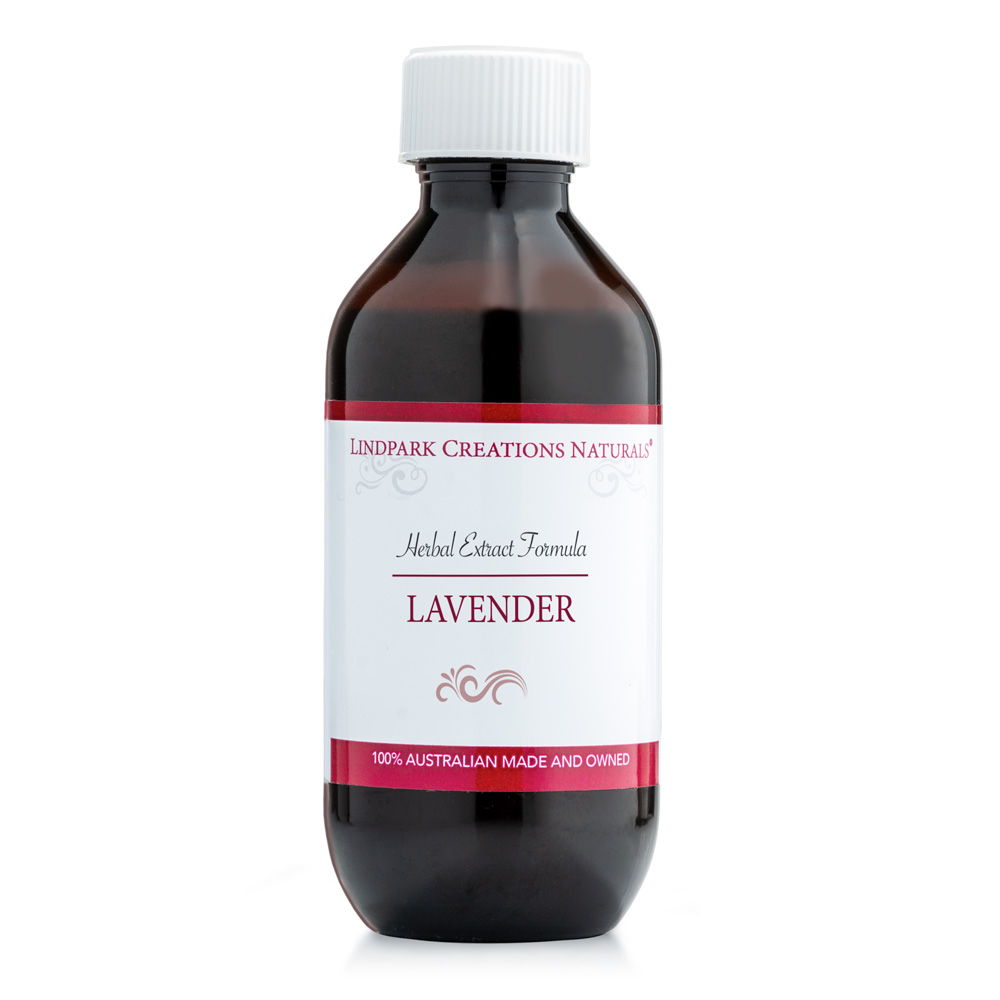
Lavender (Lavandula angustifolia) 200mL

$79.50

Lavender is a traditional herbal medicine valued for its calming, sedative and nervine properties. It is traditionally used to support relaxation, healthy sleep, digestive comfort, cognitive wellbeing and women’s wellbeing, including during menopause.

Lavender has traditionally been used to support:

  • Relaxation and nervous system wellbeing, including anxiety, restlessness and excitability
  • Healthy sleep and insomnia
  • Mild depression and low mood
  • Cognitive wellbeing and memory
  • Digestive comfort, including indigestion, flatulence, colic and irritable bowel syndrome
  • Dysbiosis and functional abdominal complaints, including gas and bloating
  • Headaches, migraines and pain management
  • Menstrual and premenstrual wellbeing, including dysmenorrhoea and PMS
  • Women’s wellbeing during menopause
  • Rheumatic discomfort
  • Support against bacterial, fungal and parasitic infections
  • Insect bites when used topically

Description

Lavender (Lavandula angustifolia)

Lavender, also known as Lavandula angustifolia, has been prized for centuries for its delightful scent and beautiful blooms. It has a long history of traditional use and was used as an antiseptic in ancient Arabian, Greek and Roman medicines.

Lavender has traditionally been valued for its calming, soothing and digestive properties. It is traditionally used to support nervous system wellbeing, relaxation and sleep, as well as healthy digestion and women’s wellbeing during menopause.

What Lavender May Support

Lavender has traditionally been used to support:

  • Healthy relaxation and nervous system wellbeing, including anxiety, restlessness and low mood
  • Healthy sleep and restful nights, particularly in cases of insomnia
  • Headache and nervous tension
  • Healthy digestive function, including indigestion, flatulence and colic
  • Digestive strength and comfort
  • Women’s wellbeing during menopause
  • Emotional wellbeing associated with menopausal depression

Key Constituents

Lavender contains a range of naturally occurring compounds, including rosmarinic acid, coumarins, flavonoids, tannins, triterpenes and volatile oils. Its volatile oil contains constituents such as cineole, borneol, camphor, linalool, perillyl alcohol, linalyl acetate and caryophyllene epoxide.

Important Information

Lavender is traditionally considered dry and hot.

There are no known restrictions for external use during pregnancy. However, the safety of internal use during pregnancy has not been scientifically established.

No contraindications or cautions are known.

Caution is advised when using Lavender alongside barbiturates, benzodiazepines and other central nervous system depressant medicines. Monitoring is advised when used with antihypertensive medicines.

Lavender may be beneficial alongside antidepressant medicines, including imipramine, when used under medical supervision.

If you take prescription medicines, have an existing medical condition or are considering internal use during pregnancy, seek advice from a qualified healthcare practitioner before use.

For more detailed information about Lavender, including its traditional uses, constituents, research and clinical considerations, please see the full herbal monograph.

Read More: Lavender (Lavandula angustifolia)_Summary
Additional information

Directions for use:

Adults: 7.5 mLs 2 x day with food or after food

Children (6-12 years): 5mLs 1 x day with or after food

*Not to be used in children under 5 years of age

Actions

  • Sedative
  • Anxiolytic
  • Nerve tonic
  • Antidepressant
  • Carminative
  • Antispasmodic

Indications

  • Anxiety
  • Bacterial infections
    • Gram-positive bacteria: Clostridium spp., Enterococcus faecalis, Enterococcus faecium, Staphylococcus aureus
    • Gram-negative bacteria: Acinetobacter baumannii, Bacteroides fragilis, Escherichia coli, Klebsiella pneumoniae, Pseudomonas aeruginosa, Salmonella enteritidis
    • Mycobacteria: Mycobacterium chelonae, Mycobacterium fortuitum, Mycobacterium kansasii, Mycobacterium marinum, Mycobacterium scrofulaceum
  • Colic, including flatulent and intestinal colic
  • Cognition
  • Dementia, including Alzheimer's disease
  • Mild depression
  • Dysbiosis
  • Dysmenorrhoea
  • Excitability
  • Functional abdominal complaints, including nervous stomach irritation, gas and bloating
  • Fungal infections
    • Aspergillus flavus
    • Aspergillus fumigatus
    • Aspergillus niger
    • Candida albicans
    • Penicillium digitatum
    • Trichophyton mentagrophytes
    • Trichophyton rubrum (tinea pedis)
  • Insect bites (topically)
  • Insomnia
  • Irritable bowel syndrome
  • Migraine headache
  • Pain management
  • Parasitic infections
  • Premenstrual syndrome (PMS)
  • Restlessness
  • Rheumatism
  • Tension headache

Click Here for a Quick Free Call to our Naturopath and have your Question Answered:

Lavender (Lavandula angustifolia) 200mL

$79.50

Lavender is a traditional herbal medicine valued for its calming, sedative and nervine properties. It is traditionally used to support relaxation, healthy sleep, digestive comfort, cognitive wellbeing and women’s wellbeing, including during menopause.

Lavender has traditionally been used to support:

  • Relaxation and nervous system wellbeing, including anxiety, restlessness and excitability
  • Healthy sleep and insomnia
  • Mild depression and low mood
  • Cognitive wellbeing and memory
  • Digestive comfort, including indigestion, flatulence, colic and irritable bowel syndrome
  • Dysbiosis and functional abdominal complaints, including gas and bloating
  • Headaches, migraines and pain management
  • Menstrual and premenstrual wellbeing, including dysmenorrhoea and PMS
  • Women’s wellbeing during menopause
  • Rheumatic discomfort
  • Support against bacterial, fungal and parasitic infections
  • Insect bites when used topically

Description

Lavender (Lavandula angustifolia)

Lavender, also known as Lavandula angustifolia, has been prized for centuries for its delightful scent and beautiful blooms. It has a long history of traditional use and was used as an antiseptic in ancient Arabian, Greek and Roman medicines.

Lavender has traditionally been valued for its calming, soothing and digestive properties. It is traditionally used to support nervous system wellbeing, relaxation and sleep, as well as healthy digestion and women’s wellbeing during menopause.

What Lavender May Support

Lavender has traditionally been used to support:

  • Healthy relaxation and nervous system wellbeing, including anxiety, restlessness and low mood
  • Healthy sleep and restful nights, particularly in cases of insomnia
  • Headache and nervous tension
  • Healthy digestive function, including indigestion, flatulence and colic
  • Digestive strength and comfort
  • Women’s wellbeing during menopause
  • Emotional wellbeing associated with menopausal depression

Key Constituents

Lavender contains a range of naturally occurring compounds, including rosmarinic acid, coumarins, flavonoids, tannins, triterpenes and volatile oils. Its volatile oil contains constituents such as cineole, borneol, camphor, linalool, perillyl alcohol, linalyl acetate and caryophyllene epoxide.

Important Information

Lavender is traditionally considered dry and hot.

There are no known restrictions for external use during pregnancy. However, the safety of internal use during pregnancy has not been scientifically established.

No contraindications or cautions are known.

Caution is advised when using Lavender alongside barbiturates, benzodiazepines and other central nervous system depressant medicines. Monitoring is advised when used with antihypertensive medicines.

Lavender may be beneficial alongside antidepressant medicines, including imipramine, when used under medical supervision.

If you take prescription medicines, have an existing medical condition or are considering internal use during pregnancy, seek advice from a qualified healthcare practitioner before use.

For more detailed information about Lavender, including its traditional uses, constituents, research and clinical considerations, please see the full herbal monograph.

Read More: Lavender (Lavandula angustifolia)_Summary

Additional information

Directions for use:

Adults: 7.5 mLs 2 x day with food or after food

Children (6-12 years): 5mLs 1 x day with or after food

*Not to be used in children under 5 years of age

Actions

  • Sedative
  • Anxiolytic
  • Nerve tonic
  • Antidepressant
  • Carminative
  • Antispasmodic

Indications

  • Anxiety
  • Bacterial infections
    • Gram-positive bacteria: Clostridium spp., Enterococcus faecalis, Enterococcus faecium, Staphylococcus aureus
    • Gram-negative bacteria: Acinetobacter baumannii, Bacteroides fragilis, Escherichia coli, Klebsiella pneumoniae, Pseudomonas aeruginosa, Salmonella enteritidis
    • Mycobacteria: Mycobacterium chelonae, Mycobacterium fortuitum, Mycobacterium kansasii, Mycobacterium marinum, Mycobacterium scrofulaceum
  • Colic, including flatulent and intestinal colic
  • Cognition
  • Dementia, including Alzheimer's disease
  • Mild depression
  • Dysbiosis
  • Dysmenorrhoea
  • Excitability
  • Functional abdominal complaints, including nervous stomach irritation, gas and bloating
  • Fungal infections
    • Aspergillus flavus
    • Aspergillus fumigatus
    • Aspergillus niger
    • Candida albicans
    • Penicillium digitatum
    • Trichophyton mentagrophytes
    • Trichophyton rubrum (tinea pedis)
  • Insect bites (topically)
  • Insomnia
  • Irritable bowel syndrome
  • Migraine headache
  • Pain management
  • Parasitic infections
  • Premenstrual syndrome (PMS)
  • Restlessness
  • Rheumatism
  • Tension headache