
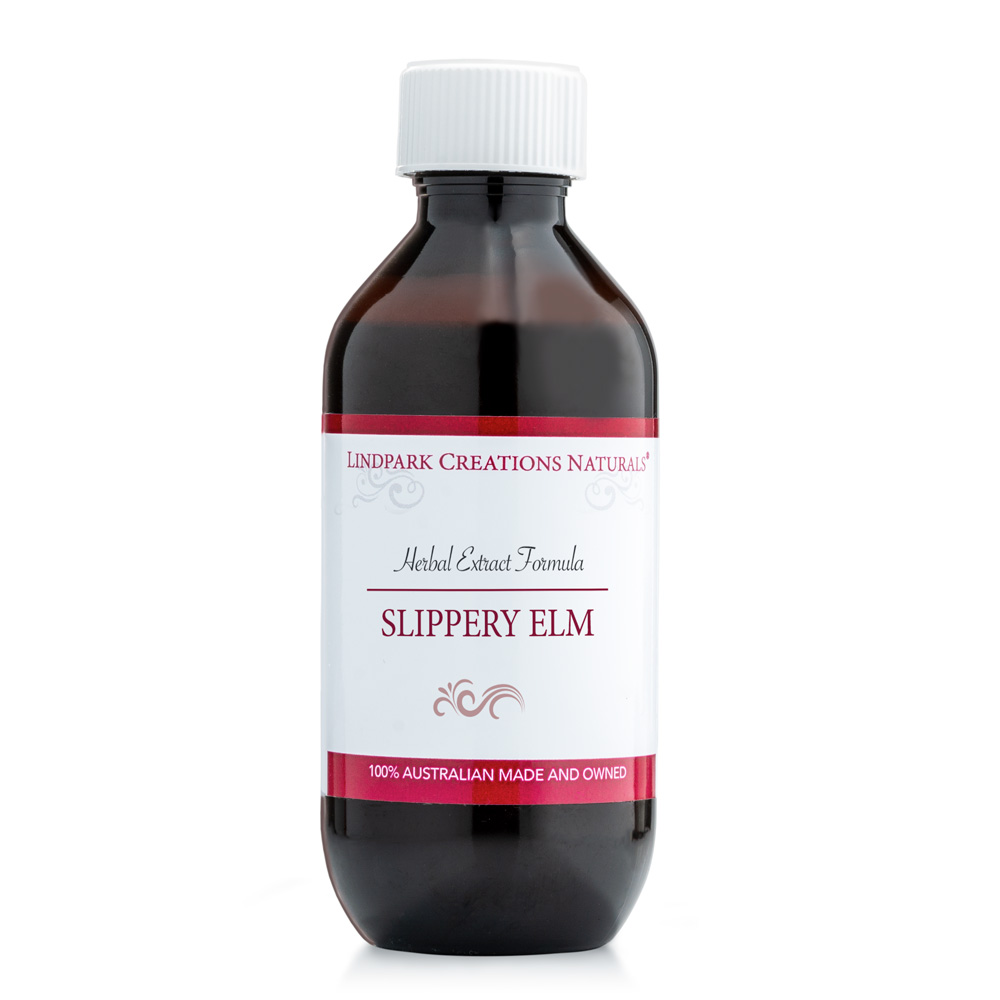
Slippery Elm (Ulmus rubra) 200mL

$79.50

Slippery Elm is a traditional herbal medicine made from the inner bark of the Slippery Elm tree. It is particularly valued for its abundant mucilage, which provides soothing and protective support for irritated mucous membranes. Traditionally, it has been used for digestive, respiratory and throat comfort, as well as nutritional support during convalescence.

It is also traditionally used for gastritis, gastric or duodenal ulcer, enteritis, colitis and the like. It is also used for diarrhoea, boils, abscesses and ulcers.

Slippery Elm has traditionally been used to support:

  • Digestive comfort, including gastritis, reflux and dyspepsia
  • Gastric and intestinal mucous membrane health
  • Healthy bowel function, including diarrhoea and constipation
  • Irritable and inflammatory bowel conditions
  • Respiratory and throat comfort, including bronchitis and throat inflammation
  • Nutritional support during convalescence
  • Skin and wound comfort when used externally as a poultice

Description

Slippery Elm (Ulmus rubra)

Slippery Elm is a large deciduous tree native to North America, traditionally valued for the soothing properties of its inner bark. The inner bark is particularly rich in mucilage, which gives Slippery Elm its characteristic slippery consistency when mixed with water and contributes to its traditional use as a demulcent, emollient and soothing herb.

Slippery Elm has traditionally been used to soothe and support the digestive and respiratory mucous membranes, as well as for nutritional support during convalescence. The powdered inner bark has also traditionally been used externally as a poultice for wounds, burns, boils, abscesses and ulcers.

Slippery Elm Bark is a soothing nutritive demulcent which is perfectly suited for sensitive or inflamed mucus membrane linings of the digestive system.

It may be used in gastritis, gastric or duodenal ulcer, enteritis, colitis and the like.

It is often used as a food during convalescence as it is gentle and easily assimilated.

In diarrhoea it will soothe and astringe at the same time. Externally it makes an excellent poultice for use in cases of boils, abscesses and ulcers.

What Slippery Elm May Support

Slippery Elm has traditionally been used to support:

  • Healthy digestive and gastrointestinal comfort, including gastritis, reflux and dyspepsia
  • Soothing of irritated gastric and intestinal mucous membranes
  • Digestive comfort associated with gastric and duodenal ulcers
  • Healthy bowel function, including diarrhoea, constipation and colitis
  • Gastrointestinal comfort in irritable and inflammatory bowel conditions, including Crohn’s disease
  • Healthy respiratory and throat comfort, including bronchitis and throat inflammation
  • Nutritional support during convalescence and recovery
  • Healthy mucous membrane function throughout the digestive and respiratory systems
  • Skin and wound comfort when used externally as a poultice for wounds, boils, burns, abscesses and ulcers

Research and Pharmacological Activity

Scientific research on Slippery Elm is limited, and much of its traditional use is based on the properties of its key constituents, particularly mucilage. Mucilage is known for its demulcent, emollient and antitussive properties and forms a soothing, protective layer over irritated mucous membranes. Tannins found in Slippery Elm are known to have astringent and antimicrobial properties.

A small Australian pilot study investigated herbal formulations containing Slippery Elm in people with irritable bowel syndrome. The formulation intended for constipation-predominant IBS significantly improved bowel habits and IBS symptoms, while the diarrhoea-predominant formulation significantly improved symptoms including pain, flatulence and bloating. Both formulations were well tolerated. However, the study was open-label and uncontrolled, and the formulations contained several herbs and other ingredients, so the findings cannot be attributed to Slippery Elm alone.

Laboratory research has also investigated Slippery Elm for its antioxidant activity. Studies have demonstrated dose-dependent free-radical-scavenging activity, including activity against superoxide, peroxyl and peroxynitrite radicals. Research using inflamed human colorectal biopsies found that Slippery Elm reduced oxygen radical release, suggesting potential relevance to inflammatory bowel conditions. Further research is needed to establish the clinical significance of these findings.

Key Constituents

Slippery Elm is best known for its abundant mucilage, consisting of hexoses, pentoses, methylpentoses and polyuronides. Hydrolysis produces compounds including galactose, glucose, fructose, L-rhamnose and galacturonic acid.

The inner bark also contains calcium oxalate, phytosterols, sesquiterpenes, cholesterol and tannins, as well as nutritional factors including iron, vitamin C, thiamine, zinc, magnesium and potassium. These nutritional constituents contribute to its traditional use as a nutritious gruel during convalescence.

Important Information

Slippery Elm has a moistening and neutral energetic profile and is traditionally valued for its soothing and protective effects on mucous membranes.

Slippery Elm is likely to be safe during pregnancy, although safety has not been fully established.

There are no known contraindications reported in the supplied monograph.

Because the mucilage may affect absorption through the digestive tract, Slippery Elm should theoretically be taken away from medications. Separate doses from medicines by at least two hours.

If you take prescription medicines or have an existing medical condition, seek advice from a qualified healthcare practitioner before use.

For more detailed information about Slippery Elm, including its traditional uses, constituents, research and clinical considerations, please see the full herbal monograph.

Read More: Slippery Elm (Ulmus rubra)_Monograph

Read More: Slippery Elm (Ulmus rubra)_Summary
Additional information

Directions for use:

Adults: 7.5 mLs 2 x day with food or after food

Children (6-12 years): 1 x day with or after food

*Not to be used in children under 5 years of age

Actions

  • Demulcent
  • Emollient
  • Nutritive
  • Antitussive
  • Anti-inflammatory
  • Antioxidant
  • Diuretic
  • Expectorant
  • Astringent

Indications

  • Gastritis, gastric reflux, dyspepsia and gastric or duodenal ulcers
  • Irritable and inflammatory bowel diseases, including Crohn's disease
  • Colitis, diarrhoea and constipation
  • Upper and lower respiratory complaints, including bronchitis and throat inflammation
  • Convalescence as a nutrient supplement
  • Externally as a poultice for wounds, boils, burns, abscesses and ulcers

Click Here for a Quick Free Call to our Naturopath and have your Question Answered:

Slippery Elm (Ulmus rubra) 200mL

$79.50

Slippery Elm is a traditional herbal medicine made from the inner bark of the Slippery Elm tree. It is particularly valued for its abundant mucilage, which provides soothing and protective support for irritated mucous membranes. Traditionally, it has been used for digestive, respiratory and throat comfort, as well as nutritional support during convalescence.

It is also traditionally used for gastritis, gastric or duodenal ulcer, enteritis, colitis and the like. It is also used for diarrhoea, boils, abscesses and ulcers.

Slippery Elm has traditionally been used to support:

  • Digestive comfort, including gastritis, reflux and dyspepsia
  • Gastric and intestinal mucous membrane health
  • Healthy bowel function, including diarrhoea and constipation
  • Irritable and inflammatory bowel conditions
  • Respiratory and throat comfort, including bronchitis and throat inflammation
  • Nutritional support during convalescence
  • Skin and wound comfort when used externally as a poultice

Description

Slippery Elm (Ulmus rubra)

Slippery Elm is a large deciduous tree native to North America, traditionally valued for the soothing properties of its inner bark. The inner bark is particularly rich in mucilage, which gives Slippery Elm its characteristic slippery consistency when mixed with water and contributes to its traditional use as a demulcent, emollient and soothing herb.

Slippery Elm has traditionally been used to soothe and support the digestive and respiratory mucous membranes, as well as for nutritional support during convalescence. The powdered inner bark has also traditionally been used externally as a poultice for wounds, burns, boils, abscesses and ulcers.

Slippery Elm Bark is a soothing nutritive demulcent which is perfectly suited for sensitive or inflamed mucus membrane linings of the digestive system.

It may be used in gastritis, gastric or duodenal ulcer, enteritis, colitis and the like.

It is often used as a food during convalescence as it is gentle and easily assimilated.

In diarrhoea it will soothe and astringe at the same time. Externally it makes an excellent poultice for use in cases of boils, abscesses and ulcers.

What Slippery Elm May Support

Slippery Elm has traditionally been used to support:

  • Healthy digestive and gastrointestinal comfort, including gastritis, reflux and dyspepsia
  • Soothing of irritated gastric and intestinal mucous membranes
  • Digestive comfort associated with gastric and duodenal ulcers
  • Healthy bowel function, including diarrhoea, constipation and colitis
  • Gastrointestinal comfort in irritable and inflammatory bowel conditions, including Crohn’s disease
  • Healthy respiratory and throat comfort, including bronchitis and throat inflammation
  • Nutritional support during convalescence and recovery
  • Healthy mucous membrane function throughout the digestive and respiratory systems
  • Skin and wound comfort when used externally as a poultice for wounds, boils, burns, abscesses and ulcers

Research and Pharmacological Activity

Scientific research on Slippery Elm is limited, and much of its traditional use is based on the properties of its key constituents, particularly mucilage. Mucilage is known for its demulcent, emollient and antitussive properties and forms a soothing, protective layer over irritated mucous membranes. Tannins found in Slippery Elm are known to have astringent and antimicrobial properties.

A small Australian pilot study investigated herbal formulations containing Slippery Elm in people with irritable bowel syndrome. The formulation intended for constipation-predominant IBS significantly improved bowel habits and IBS symptoms, while the diarrhoea-predominant formulation significantly improved symptoms including pain, flatulence and bloating. Both formulations were well tolerated. However, the study was open-label and uncontrolled, and the formulations contained several herbs and other ingredients, so the findings cannot be attributed to Slippery Elm alone.

Laboratory research has also investigated Slippery Elm for its antioxidant activity. Studies have demonstrated dose-dependent free-radical-scavenging activity, including activity against superoxide, peroxyl and peroxynitrite radicals. Research using inflamed human colorectal biopsies found that Slippery Elm reduced oxygen radical release, suggesting potential relevance to inflammatory bowel conditions. Further research is needed to establish the clinical significance of these findings.

Key Constituents

Slippery Elm is best known for its abundant mucilage, consisting of hexoses, pentoses, methylpentoses and polyuronides. Hydrolysis produces compounds including galactose, glucose, fructose, L-rhamnose and galacturonic acid.

The inner bark also contains calcium oxalate, phytosterols, sesquiterpenes, cholesterol and tannins, as well as nutritional factors including iron, vitamin C, thiamine, zinc, magnesium and potassium. These nutritional constituents contribute to its traditional use as a nutritious gruel during convalescence.

Important Information

Slippery Elm has a moistening and neutral energetic profile and is traditionally valued for its soothing and protective effects on mucous membranes.

Slippery Elm is likely to be safe during pregnancy, although safety has not been fully established.

There are no known contraindications reported in the supplied monograph.

Because the mucilage may affect absorption through the digestive tract, Slippery Elm should theoretically be taken away from medications. Separate doses from medicines by at least two hours.

If you take prescription medicines or have an existing medical condition, seek advice from a qualified healthcare practitioner before use.

For more detailed information about Slippery Elm, including its traditional uses, constituents, research and clinical considerations, please see the full herbal monograph.

Read More: Slippery Elm (Ulmus rubra)_Monograph

Read More: Slippery Elm (Ulmus rubra)_Summary
Additional information

Directions for use:

Adults: 7.5 mLs 2 x day with food or after food

Children (6-12 years): 1 x day with or after food

*Not to be used in children under 5 years of age

Actions

  • Demulcent
  • Emollient
  • Nutritive
  • Antitussive
  • Anti-inflammatory
  • Antioxidant
  • Diuretic
  • Expectorant
  • Astringent

Indications

  • Gastritis, gastric reflux, dyspepsia and gastric or duodenal ulcers
  • Irritable and inflammatory bowel diseases, including Crohn's disease
  • Colitis, diarrhoea and constipation
  • Upper and lower respiratory complaints, including bronchitis and throat inflammation
  • Convalescence as a nutrient supplement
  • Externally as a poultice for wounds, boils, burns, abscesses and ulcers