Description
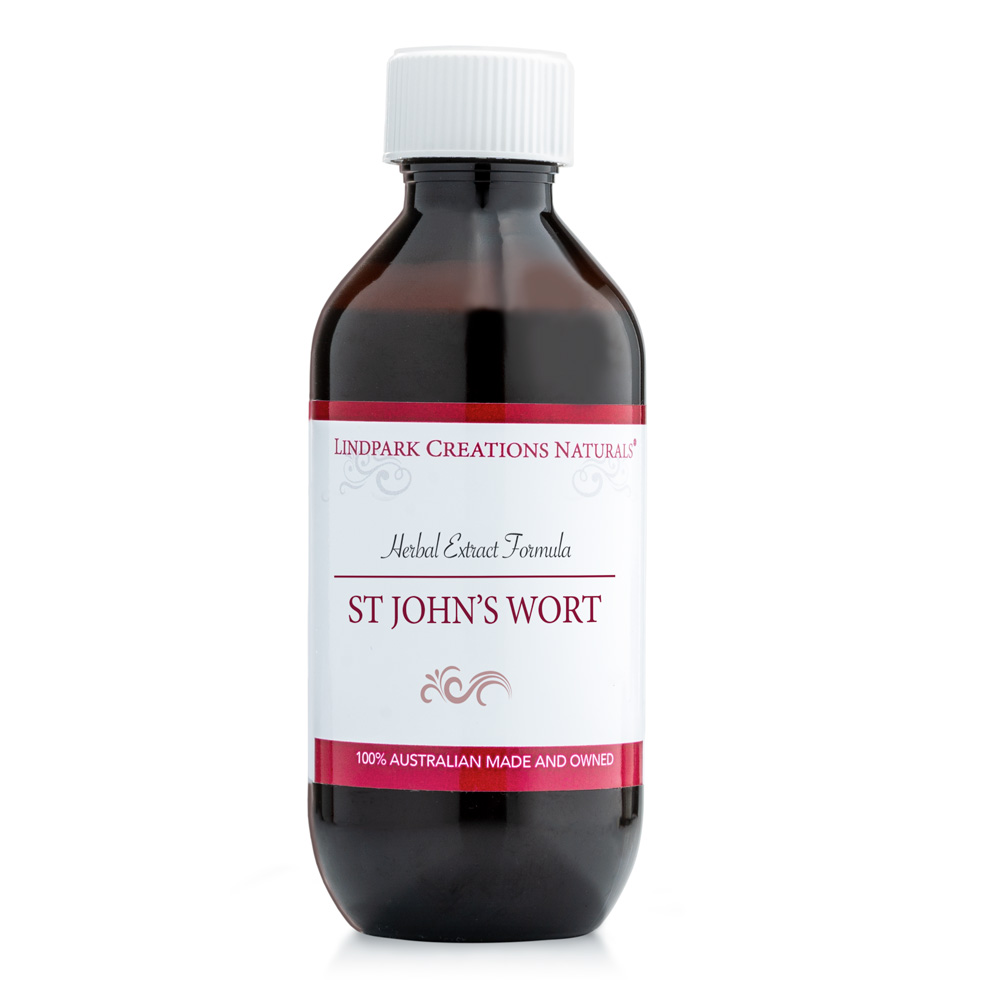
St John’s Wort (Hypericum perforatum)
St John’s Wort is a traditional herbal medicine that has been used for centuries in Europe. It was traditionally valued for supporting damaged nerve endings, and it is now widely recognised for its use in nervous system and emotional wellbeing, particularly in relation to mild to moderate depression, anxiety and stress.
St John’s Wort has a broad range of traditional applications, including nervous system support, digestive health, liver function, inflammatory conditions and topical skin care. Its activity is associated with a complex combination of plant constituents, rather than one isolated compound.
Taken internally, St John’s Wort has a sedative and pain-reducing effect, which gives it a place in the treatment of neuralgia, anxiety, tension, and similar problems.
It is especially regarded as a herb to use where there are menopausal changes, triggering irritability and anxiety.
It is recommended; however, it will not be used when there is marked depression.
In addition to neuralgic pain, it will ease fibrositis, sciatica and rheumatic pain.
Externally, St John’s Wort is a valuable healing and anti-inflammatory remedy.
As a lotion, it will speed the healing of wounds and bruises, varicose veins and mild burns. The oil is especially useful in the healing of sunburn.
What St John’s Wort May Support
St John’s Wort has traditionally been used to support:
- Emotional wellbeing, including mild to moderate depression, anxiety, stress and burnout
- Nervous system health and recovery from nerve-related discomfort
- Mental and emotional wellbeing during exhaustion and chronic fatigue associated with viral infection and depressive symptoms
- Seasonal affective disorder and psychological symptoms associated with perimenopause and menopause
- Premenstrual syndrome and associated emotional and physical symptoms
- Nervous system comfort in conditions involving nerve pain, sciatica, fibromyalgia and migraine headaches
- Digestive and gastrointestinal wellbeing, including oesophagitis and peptic ulcers
- Healthy liver function and traditional support for liver stagnation
- Healthy inflammatory and immune responses, including antiviral activity
- Skin comfort and recovery when used topically for burns, injuries, allergic dermatitis, psoriasis and muscle pain
- Topical support for bacterial vaginosis
Research and Pharmacological Activity
Research has investigated St John’s Wort extensively, particularly for its antidepressant, anxiolytic, antiviral, anti-inflammatory and nervous system effects. Clinical studies have explored its use in mild to moderate depression, seasonal affective disorder, menopausal symptoms, premenstrual syndrome and other areas of emotional wellbeing.
A 2016 systematic review of 35 studies involving 6,993 patients found evidence that St John’s Wort was effective for mild to moderate major depressive disorder compared with placebo and comparable to antidepressants. However, the monograph notes that the findings cannot be easily applied to all St John’s Wort preparations because their composition, quality and manufacturing processes may vary considerably.
Research has also investigated St John’s Wort for menopausal symptoms, premenstrual syndrome, smoking cessation and antiviral activity. Laboratory and clinical research has explored its effects against viruses, including members of the herpes virus family. Topical research has also reported potential benefits for mild to moderate plaque psoriasis.
The pharmacological activity of St John’s Wort is thought to involve multiple constituents working together. Research suggests that the overall activity of the whole extract cannot be attributed solely to hypericin or hyperforin, and that chemical synergy between several plant compounds may contribute to its effects.
Key Constituents
St John’s Wort contains several groups of naturally occurring compounds, including naphthodianthrones, flavonoids, phenolic compounds, procyanidins, essential oils, sterols, vitamins, xanthones and choline.
Important constituents include hypericin, pseudohypericin, hyperforin, hyperoside, rutin, quercitrin, isoquercitrin, quercetin, kaempferol and beta-sitosterol. Hypericin is associated with photosensitivity reactions, while hyperforin is associated with the induction of metabolic pathways involved in many drug interactions. Research suggests that the combined activity of multiple constituents contributes to the effects of the whole extract.
Important Information
St John’s Wort has a neutral energetic profile, with warming and cooling potential, and is drying. Its taste is described as slightly bitter, pungent and sweet.
St John’s Wort is not recommended during pregnancy.
Some people, particularly those with fair skin, may experience photosensitivity when taking St John’s Wort, especially hypericin-standardised extracts. People taking St John’s Wort internally or applying it externally should avoid artificial light, including tanning beds, and avoid concurrent use with other photosensitising medicines such as retinoids.
St John’s Wort is well known for its extensive potential for herb–drug interactions. It can increase the activity of metabolic enzymes and P-glycoprotein, potentially reducing the blood levels and therapeutic effects of numerous medicines. Interactions may also occur after discontinuing St John’s Wort, as medicine levels may subsequently increase and cause toxicity.
St John’s Wort should not be started alongside medicines such as antidepressants, anticonvulsants, antivirals, barbiturates, benzodiazepines, cardiac glycosides, chemotherapeutics, hormonal contraceptives, HIV medicines, immunosuppressants, triptans and warfarin, unless specifically directed and closely supervised by a qualified healthcare professional. This list is not exhaustive.
If you take prescription medicines, particularly medicines with a narrow therapeutic range, seek professional advice before using St John’s Wort. Always inform your healthcare practitioner that you are taking St John’s Wort before starting, stopping or changing any medication.
For more detailed information about St John’s Wort, including its traditional uses, constituents, research and clinical considerations, please see the full herbal monograph.