

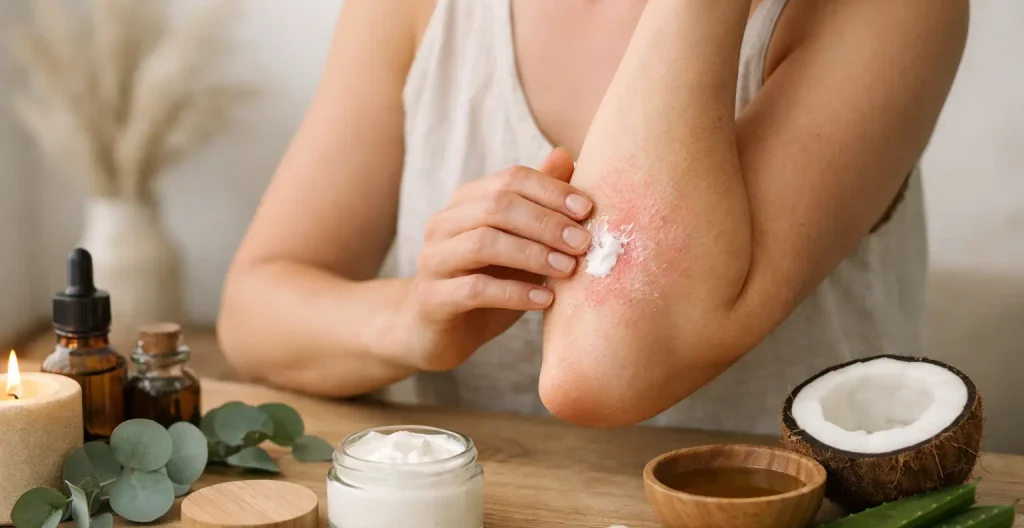

If you are lying awake scratching, changing creams every few weeks, and still wondering why your skin keeps flaring, you are not imagining it.
For many people, how to heal eczema naturally is not about finding one miracle cream (although ours is REALLY good)… It is about understanding why the skin barrier keeps breaking down in the first place, and what your body has been trying to tell you all along.
Eczema is often treated as a surface problem. The rash is visible, so the focus stays on the rash. But chronic eczema rarely starts and ends at the skin. In clinic, we often see a deeper pattern involving immune dysregulation, gut irritation, food reactions, stress overload, hormonal shifts, poor skin barrier function, and ongoing inflammation. When you work with those drivers instead of chasing symptoms, the skin has a far better chance to settle.
How to heal eczema naturally starts with the root cause
Natural healing does not mean doing nothing and hoping for the best. It means using a whole-body strategy that supports repair. This approach can work beautifully, but it also requires patience. Skin renewal takes time, especially if you have had eczema for years.
One person may flare after certain foods. Another may be triggered by stress, synthetic fragrances, dust mites, or a disrupted gut microbiome after repeated antibiotics. For many adults, it is a combination rather than a single cause. That is why cookie-cutter advice can be so frustrating. If your eczema has been persistent, it is worth asking not just what calms it down temporarily, but what keeps driving it back.
Calm the inflammation coming from the inside
Food is not the whole story, but it can be a major piece of it. Some people notice obvious aggravators such as dairy, gluten, eggs, alcohol, processed sugar, or highly processed foods. Others have more subtle reactions that build over time and show up as itching, weeping skin, dryness, bloating, sinus congestion, or fatigue.
A natural eczema plan usually begins by reducing the inflammatory load. That means eating in a way that nourishes the skin and steadies the immune system. Think whole foods, quality protein, colourful vegetables, healthy fats, mineral-rich meals, and enough hydration. Omega-3 fats can be especially helpful because they support a healthier inflammatory response and skin barrier.
The trade-off is that overly restrictive diets can backfire. Cutting out ten foods at once may leave you stressed, undernourished, and unsure what is actually helping. A smarter approach is targeted, guided, and time-limited. Remove likely triggers, support digestion, observe the skin carefully, and then reintroduce with purpose.
Gut health matters more than most people realise
There is a strong connection between the gut, the immune system, and the skin. If the gut lining is irritated, digestion is sluggish, or the microbiome is out of balance, eczema can become harder to shift. Constipation, reflux, bloating, loose stools, and food intolerance often sit in the background of chronic skin conditions.
Supporting gut health may include improving stomach acid and digestive function, identifying food intolerances, restoring beneficial bacteria, and reducing irritation from alcohol, ultra-processed foods, or long-term stress. It depends on the person. Some people need more fibre and plant diversity. Others need a gentler plan first because their digestion is already inflamed.
Repair the skin barrier without overwhelming it
When the skin barrier is damaged, moisture escapes and irritants get in more easily. That is when the cycle of dryness, redness, and itching becomes relentless. Natural topical care should focus on protection and repair, not on loading the skin with dozens of active ingredients.
Try our completely natural skin lotion that we’ve been using on all our eczema and dermatitis patients for many years with great success.
Fragrance-free, gentle moisturising is essential. Thick, simple formulations are often better than trendy products packed with botanicals, acids, or essential oils. Natural does not always mean non-irritating. Some beautiful plant ingredients can still trigger reactive skin.
Keep showers warm rather than hot, and shorter if possible. Harsh soaps, foaming body washes, long hot baths, and over-cleansing can strip the skin further. Pat the skin dry and moisturise while it is still slightly damp. This simple step can make a real difference over time.
The itch-scratch cycle has to be interrupted
Eczema often worsens not only because the skin is inflamed, but because ongoing scratching creates micro-damage that keeps the flare alive. This is not about willpower. When the skin is intensely itchy, the nervous system is involved too.
Cold compresses, regular moisturising, breathable clothing, and identifying overheating triggers can help. For some people, stress reduction and nervous system support reduce itching more than they expect. That is because the body does not separate emotional stress from physical stress as neatly as we would like.
Stress can be a genuine eczema trigger
Many people know this instinctively. They can go weeks with relatively calm skin, then one stressful period hits and the flare returns. Stress changes immune signalling, affects sleep, disrupts digestion, and weakens skin repair. If you have been pushing through exhaustion, your eczema may be reflecting that load.
This is where a natural approach becomes more than creams and diet. Breathwork, better sleep habits, gentle movement, time in nature, meditation, nervous system support, and practitioner-guided care can all be part of eczema healing. Not because stress is the only cause, but because a dysregulated body struggles to heal anything well.
If your flares coincide with burnout, grief, poor sleep, or hormonal upheaval, that pattern matters. Ignoring it can keep you stuck.
How to heal eczema naturally when hormones are involved
Hormones can influence the severity of eczema, especially in women during perimenopause, menopause, pregnancy, or around the menstrual cycle. Oestrogen shifts can affect skin hydration and barrier integrity, while stress hormones can amplify inflammation.
This does not mean every eczema case is hormonal. But if your skin became worse during a major hormonal transition, it deserves attention. Supporting liver function, blood sugar balance, sleep, stress resilience, and nutrient status can be important here. Often the skin improves when the whole hormonal picture is steadier.
We will check your adrenal and female/male hormones along with thyroid hormones to ensure we know which herbs to use to regulate. See our Eczema 12-Week Program for more functional testing done.
Natural support should be personalised
This is the part many people miss. Two people can both have eczema and need completely different plans. One may need gut repair and food trigger investigation. Another may need a strong focus on environmental triggers, mould exposure, stress, and skin barrier restoration. Another may need help after years of topical steroid use and a deeply reactive immune system.
That is why a personalised naturopathic approach can be so valuable. Rather than guessing, you look at the whole terrain – symptoms, history, diet, digestion, hormones, stress, environment, and immune load. At Linda Marion Parker ND, this root-cause lens is central to helping people move from flare management towards genuine skin recovery.
What natural healing can and cannot do?
Natural care can be powerful, especially when eczema is chronic and clearly tied to lifestyle, gut, hormonal, or inflammatory patterns. If the skin is cracked, bleeding, hot, or showing signs of infection, get proper care quickly.
Natural healing is also not always linear. Sometimes the first win is better sleep because the itching reduces. Then the redness begins to settle. Then flares become shorter and less intense. Lasting change often happens in layers, not overnight.
That does not mean you are failing. It means your body is repairing at the pace it can manage.
A better question than how to stop eczema fast?
Most people searching how to heal eczema naturally are exhausted by temporary fixes. That exhaustion is valid. But the better question is not how to suppress the flare as fast as possible. It is what your skin needs to become less reactive over time.
When you support the gut, calm the immune system, reduce inflammatory triggers, repair the barrier, and work with stress and hormones, the skin often stops fighting so hard. That is where real relief begins. Not in chasing the next product, but in finally listening to the whole body.
When you respond at the root, healing becomes far more possible.
See our Eczema Restore 12-Week Program for more information.