

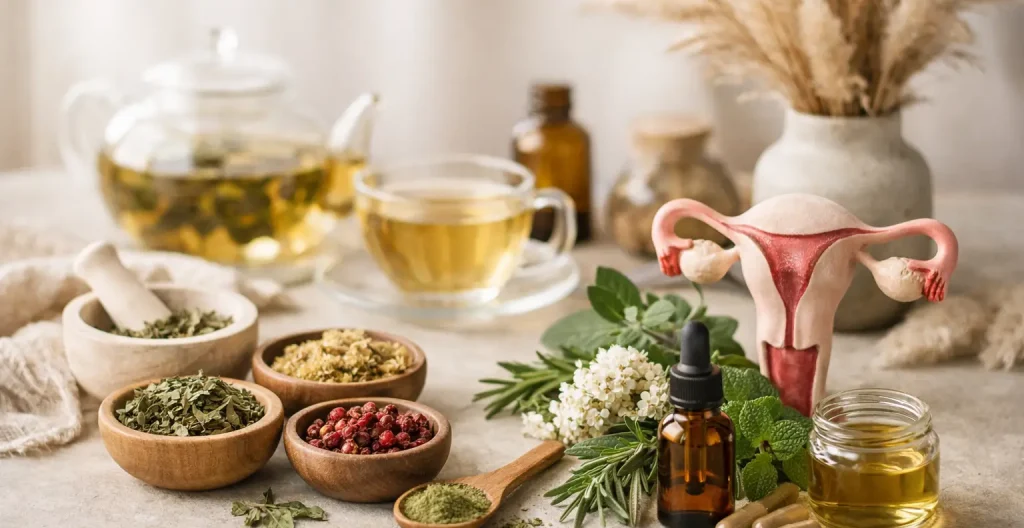

If you have been told to just go on the Pill, lose weight, or accept the acne, hair growth, irregular cycles and exhaustion as part of being a woman, you are not alone. When women search for the best herbs for PCOS, they are rarely looking for a quick fix. They are looking for relief, regulation and a real path back to balance.
PCOS is not one neat little box. It is a pattern of disruption that can involve insulin resistance, androgen excess, inflammation, poor ovulation, gut dysfunction, stress chemistry and often skin flare-ups that chip away at confidence. That is why herbs can be incredibly helpful, but only when matched to the driver underneath your symptoms. If you find the cause, you find the cure.
What makes the best herbs for PCOS actually effective?
The best herbal support for PCOS does not work by forcing the body. It works by guiding it. A well-chosen herb can help improve insulin sensitivity, calm inflammation, support ovulation, reduce excess androgens, nourish the nervous system and ease the burden on the liver.
But herbs are not interchangeable. A woman with long cycles, acne and elevated testosterone may need a very different prescription to someone with PCOS, anxiety, cravings, poor sleep and stubborn weight gain. This is where naturopathic medicine shines. We do not just chase the diagnosis. We look at the terrain.
1. Vitex for cycle irregularity and ovulation support
Vitex, also called Chaste tree, is one of the most discussed herbs in women’s health and for good reason. It can be deeply supportive when ovulation is absent or inconsistent, particularly if cycles are long and progesterone is low.
Vitex works upstream through the brain-ovary conversation rather than acting like a hormone itself. For some women, that means more regular cycles over time, less premenstrual mood volatility and clearer signs that ovulation is returning.
This herb is not ideal for everyone with PCOS. If your symptoms are strongly driven by high LH or pronounced androgen excess, vitex can sometimes be the wrong fit. It is also not the kind of herb you take for two weeks and judge. It often needs time and proper case assessment.
2-3. Peony and Liquorice for androgen excess
When PCOS shows up as jawline acne, scalp hair thinning, excess facial hair and oily skin, the androgen picture matters. A traditional pairing of white peony and liquorice is often used in naturopathic and integrative care to help soften excess androgen activity and support more regular hormonal signalling.
Liquorice can also be soothing for stress-depleted women, especially when there is burnout woven into the hormonal picture. White peony is valued for its regulatory action and its ability to support hormonal balance in a more nuanced way.
There is a trade-off here. Liquorice is not suitable for everyone, particularly if you have high blood
4. Cinnamon for insulin resistance patterns
Many women with PCOS are not overeating or doing anything wrong. Their blood sugar regulation is simply working against them. They may feel ravenous, shaky, flat after meals, unable to lose weight despite effort, and stuck in an inflammatory cycle that worsens hormones and skin.
Cinnamon is often used to support insulin sensitivity and glucose regulation. It can be helpful in women whose PCOS picture includes sugar cravings, energy crashes and central weight gain.
This is where root-cause work becomes powerful. If insulin resistance is driving your hormone imbalance, supporting blood sugar can improve much more than weight. It can influence ovulation, inflammation, cravings, mood and even acne. Herbs like cinnamon work best when paired with a protein-rich diet, mineral support and realistic meal rhythm.
5. Berberine-containing herbs for metabolic PCOS
Berberine is not one single herb but a compound found in plants such as barberry and goldenseal. It is widely used in integrative practice for women with metabolic-type PCOS because it can help improve insulin sensitivity, support healthier blood sugar patterns and reduce some inflammatory load.
For some women, berberine is one of the most effective natural tools in the plan. It may be especially relevant when fasting insulin is high, cycles are absent and weight is hard to shift despite best efforts.
That said, stronger is not always better. Berberine is not appropriate in pregnancy and may not suit women with sensitive digestion or those on certain medications. It also does not replace the need to understand why your metabolism is struggling in the first place.
6. Ashwagandha when stress is part of the PCOS picture
PCOS and stress have a complicated relationship. Chronic stress can worsen insulin resistance, increase inflammation, disturb sleep and push the body further away from ovulation. Many women with PCOS are tired but wired, anxious, inflamed and carrying far more than their system can process.
Ashwagandha can be a beautiful herb when nervous system depletion is part of the story. It is often used to support resilience, calm cortisol patterns and improve energy in a steadier way.
But it depends on the individual. If someone tends to run hot, overstimulated or has a thyroid pattern that needs closer management, another adaptogen may be a better fit. Herbal medicine is never just about what is popular. It is about what your body is asking for.
7. Turmeric for inflammation and skin flare-ups
Inflammation is a quiet driver in many PCOS cases, especially when acne, gut issues, painful periods or stubborn weight changes are also present. Turmeric is one of the most valuable anti-inflammatory herbs in natural medicine and can be useful when the whole system feels inflamed and reactive.
For women with PCOS-related breakouts, digestive discomfort and a sense that the body is constantly fighting itself, turmeric can offer gentle but meaningful support. It is not only about reducing visible symptoms. It is about helping the internal environment become less hostile to healing.
Absorption matters with turmeric, and so does quality. Not all formulations work equally well, which is one reason practitioner guidance can make a real difference.
8. Shatavari for nourishment and hormonal steadiness
Shatavari is often overlooked in PCOS because it is more classically associated with female reproductive nourishment than with androgen excess. Yet for some women, especially those who are depleted, dry, stressed and hormonally erratic, it can be deeply restorative.
This herb is less about forcing the body into action and more about rebuilding. In women whose cycle disturbance sits alongside adrenal strain, poor sleep, low reserves and emotional exhaustion, that kind of nourishment can be exactly what creates enough safety for healing to begin.
Again, context matters. Shatavari may not be the first herb chosen for every PCOS presentation, but in the right case it can be transformative.
How to choose the best herbs for PCOS for your body
This is the part most articles skip. The best herbs for PCOS depend on your pattern, not just your diagnosis.
If your main issue is irregular or absent ovulation, the approach may lean towards herbs like vitex. If acne, facial hair and scalp hair loss are dominating, anti-androgen support may be more appropriate. If insulin resistance is the clear driver, metabolic herbs and blood sugar work usually need to be front and centre. And if your body is stuck in a stress loop, adaptogens and nervous system repair can change far more than people expect.
This is why a proper case history matters. Your cycle, skin, digestion, sleep, energy, pathology, emotional state and even your story all give clues. Healing is faster when the prescription matches the person.
Herbs are powerful, but they are not the whole plan
If you are serious about reversing the pattern behind PCOS, herbs need to sit inside a broader strategy. That may include balancing blood sugar, increasing protein, reducing inflammatory food triggers, supporting gut health, improving sleep and working on the emotional load your body has been carrying.
For many women, skin is the messenger. Acne, pigmentation, hair loss and oiliness are not random cosmetic annoyances. They are signs that the inner terrain is asking for attention. This is where a root-cause naturopathic approach can be life-changing, because it stops separating your hormones from your skin, digestion, energy and mood.
A carefully prescribed herbal formula can absolutely support transformation. But the deepest results come when the body is finally given what it has been missing – safety, nourishment, rhythm and targeted support.
If you have tried random supplements and still feel like your hormones are running the show, do not take that as proof that natural medicine does not work. More often, it means the plan was too generic. The body responds when it is understood properly, and that is where real healing begins.