
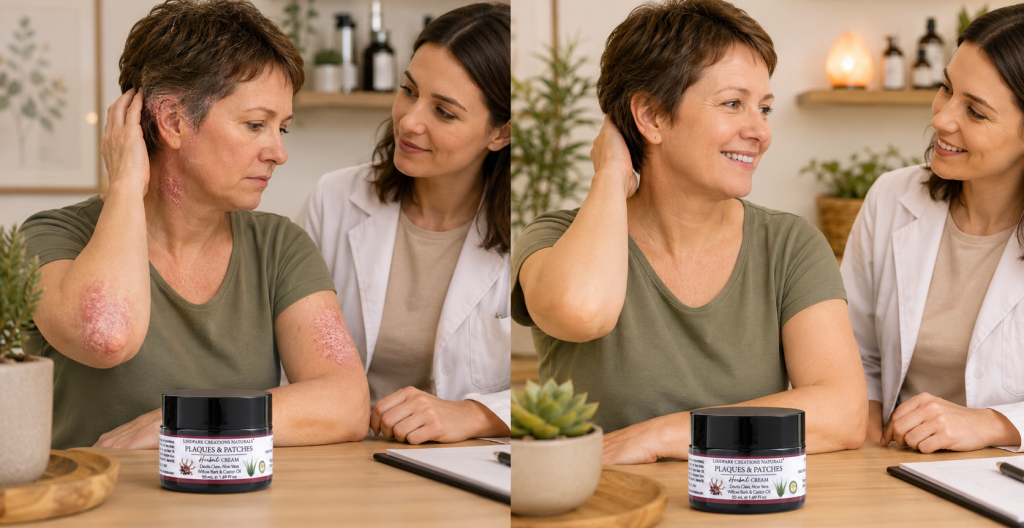

When psoriasis flares up, skin does not just feel dry. It can feel tight, hot, cracked, itchy, flakey and exhausting.
Finding the best natural moisturiser for psoriasis is about choosing ingredients that help protect a damaged skin barrier, reduce scaling and itch that can wear you down physically and emotionally.
For many women over 40, psoriasis is not happening in isolation either. Hormonal shifts, stress, gut issues, immune dysregulation and inflammation often move together. That is why the right moisturiser matters, but it is only one part of the healing picture. An effective cream can repair the surface and give relief. Real progress comes when the body is supported holistically.
What makes the best natural moisturiser for psoriasis?
Psoriasis-prone skin usually needs more than light hydration. It needs deep emollient support, barrier protection and ingredients that calm irritation without adding further stress. The best natural moisturiser for psoriasis are chemical free, rich, simple and fragrance-free with no nasties or filler excipients.
A good natural moisturiser should help reduce water loss from the skin, soften thick or flaky patches and create a protective layer so skin can recover. This means looking for oils and botanical ingredients that nourish and feed the skin rather than strip the skin or inflame it further.
Ingredients that are often helpful include shea butter, calendula, aloe vera, jojoba, castor oil and gentle herbal infusions, such as Devil’s claw and Calendula. These can support comfort and moisture retention.
What matters just as much is what is left out. Strong synthetic fragrance, harsh preservatives and foaming ingredients can all aggravate already reactive skin. Psoriasis skin can be incredibly individual.
The ingredients that tend to work best
Rich plant butters are often a strong place to begin. Shea butter is one of the most useful because it is deeply moisturising and generally well tolerated. It helps soften plaques and reduce that dry, stretched feeling that can make movement uncomfortable.
CASTOR OIL s another valuable ingredient. It is thick, protective and excellent for sealing moisture into dry skin. In practitioner-formulated creams, it can pair beautifully with herbs that support inflammation and repair. This is particularly helpful when psoriasis patches are rough, stubborn and prone to cracking.
Calendula is worth paying attention to if your skin feels angry and tender. Traditionally used for soothing distressed skin, it can be a lovely option in creams designed for sensitivity. Aloe vera can also be calming, especially when skin feels hot, but some people find gels alone are not moisturising enough. They are usually best combined with richer emollients.
VITAMIN E is another ingredient and major antioxidant protecting the skin as it calms itching while supporting the skin barrier.
Patch testing matters, especially if your skin barrier is compromised. Apply a small amount to a discreet area first and watch for increased redness, burning or itching over 24 hours.
This is also why many people get frustrated after trying random health shop products. The issue is not always the product itself. Sometimes the formulation is too light, too fragranced, or not designed for skin that is deeply inflamed and chronically dry.
How to use our Plaques & Patches moisturiser so it actually helps
Psoriasis skin usually responds best to frequent, generous moisturising rather than a small amount once a day.
Apply your Plaques & Patches moisturiser 2-3 x day. Hot water can worsen dryness and inflammation, so cooler showers are usually kinder. Pat the skin dry instead of rubbing, then apply the cream straight away.
During a flare-up, reapplying to problem areas through the day can make a noticeable difference. Night-time is also powerful. The Plaques & Patches moisturiser is applied before bed gives the skin a longer recovery window. Some people do well covering stubborn patches with soft cotton clothing afterwards to help the product sit on the skin.
Consistency matters more than perfection. Skin often needs regular support for weeks before it looks and feels calmer.
When a herbal cream may be a better option
For some people, plain moisturisers found on the chemist or supermarket shelves are not enough. These mass produced creams, using cheap ingredients may not change the deeper irritation or recurrent inflammation. That is where a well-formulated herbal cream can offer more value and faster relief.
A practitioner-led cream using nourishing oils and targeted herbs may help calm skin while still delivering the barrier repair benefits of a moisturiser. This approach can be especially appealing for women who are already seeking more natural, non-toxic options and want something aligned with whole-body healing.
In our clinic experience, many clients with chronic skin issues also have overlapping hormonal or inflammatory drivers. That is one reason products featuring castor oil and herbal support can be so valuable. They do more than sit on the surface. They become part of a broader ritual of repair.
If you are already navigating perimenopause or menopause, and your skin has become more reactive, dry or inflamed, it is worth considering whether your current skincare is meeting your skin where it is now. Hormonal transitions can change everything from moisture levels to skin resilience.
Why psoriasis often needs more than moisturiser
This is the piece many people feel in their bones. You can cream the skin every day and still know something deeper is driving the cycle. Psoriasis is often linked with immune dysfunction, inflammatory load, stress burden, gut imbalance and, in some cases, hormonal shifts.
That does not mean moisturisers are pointless. Treatment must be topically as well as internally. It is essential for barrier support and reducing irritation. But if your psoriasis keeps returning, spreading or worsening, it may be time to look beneath the surface.
A root-cause naturopathic approach asks different questions. What is fuelling inflammation? How is gut function? Is stress keeping the nervous system in overdrive? Are there hormonal patterns affecting the skin? When you find the cause, you are far more likely to find lasting change rather than short-lived relief.
This whole-person view is often what people have been missing for years. They have been handed creams for the skin, while the body has been crying out for deeper support.
Choosing the best natural moisturiser for your skin type
If your plaques are thick, very dry and cracking, choose a heavier balm or cream with shea butter, castor oil or beeswax. If your skin is inflamed and itchy but you dislike thick textures, a nourishing cream with calendula, aloe and jojoba may feel more manageable.
If you are highly sensitive, go for minimal ingredients and avoid strong essential oils. If scaling is significant, richer formulas tend to work better than lotions. Lightweight lotions often feel pleasant at first but may not hold moisture long enough to support psoriasis-prone skin.
It is also wise to observe your triggers. If a product stings on application, leaves the skin hotter, or increases redness, your skin is telling you something. Natural skincare should feel supportive, not punishing.
A more healing way to think about skincare
Psoriasis can affect confidence, clothing choices, sleep, relationships and your sense of ease in your own body. So the best moisturiser is not just one that makes skin look better for a few hours. It is one that helps you feel held, soothed and supported while you work on the deeper terrain of healing.
That is the difference between a cosmetic mindset and a therapeutic one. One asks, how do I cover this up? The other asks, how do I nourish my skin and my body so healing becomes possible?
If you have been through the cycle of hope, flare and disappointment more times than you can count, be gentle with yourself. Start with ingredients that protect and calm. Stay consistent.
Pay attention to what your body is communicating. And if your skin keeps signalling that something deeper is out of balance, listen to that wisdom and seek the advice from The Skin Naturopath.
If you’re ready to take the next step in supporting your skin, our Psoriasis Freedom Program offers a personalised naturopathic approach to help address the deeper factors contributing to psoriasis flare-ups.
Click below for more information:
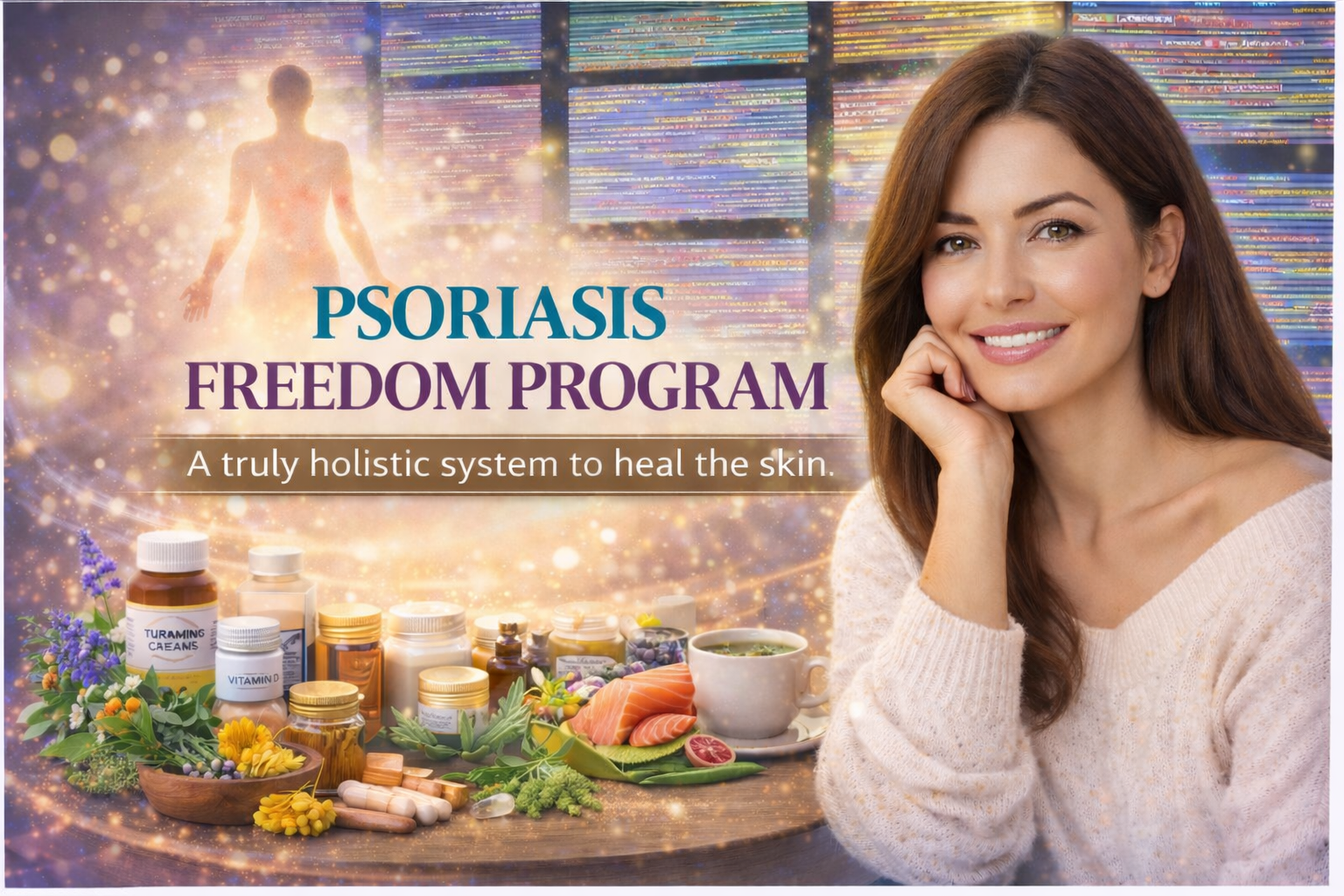
PSORIASIS FREEDOM PROGRAM: A truly holistic system to heal the skin.
The Psoriasis Freedom 6-Month Program is a holistic skin healing journey designed for those living with chronic psoriasis, whether it has persisted for months or decades.