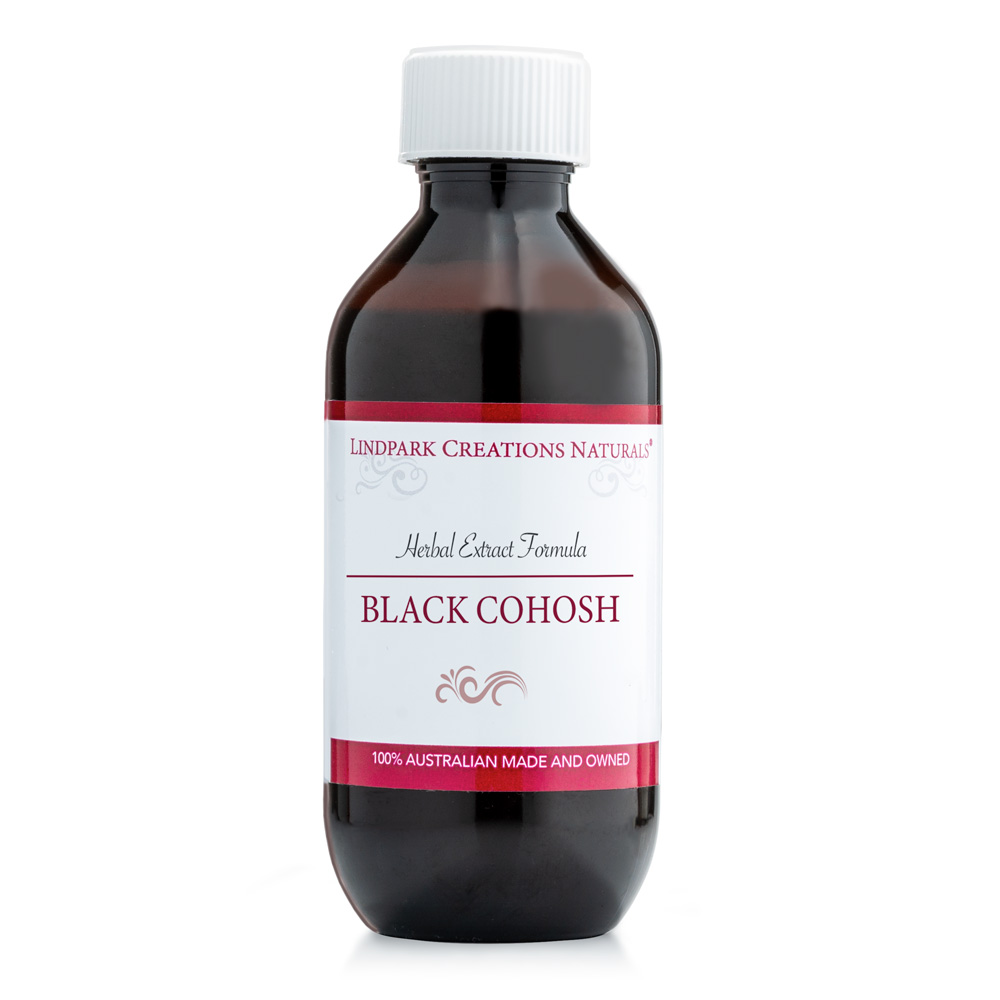
Black Cohosh (Cimicifuga racemosa) 200mL

$79.50

Black Cohosh (Actaea racemosa) is a traditional North American herbal medicine particularly valued for women’s health and support during the menopausal transition. Traditionally used for menstrual discomfort, menopausal symptoms, headaches and nervous system support, Black Cohosh is commonly used as a cooling herb and uterine tonic.

Black cohosh is traditionally used for:

  • Powerful relaxant and normaliser of the female reproductive system
  • Beneficial in delayed or painful menstruation
  • Ovarian cramps or cramping pain
  • Rheumatic pains/rheumatic arthritis
  • Osteo arthritis
  • Muscular and neurological pain
  • Whopping cough
  • Tinnitus
  • Aids uterine activity in labour


Description

Black Cohosh (Actaea racemosa) is a perennial herb native to eastern North America and Canada. Also previously known as Cimicifuga racemosa, Black Cohosh belongs to the buttercup family (Ranunculaceae), and its root is the part traditionally used in herbal medicine.

Black Cohosh has a long history of traditional use among North American Indigenous peoples and later in Western herbal medicine, particularly for women’s health and nervous system support. It has traditionally been used for menstrual discomfort, pain associated with childbirth, menopausal complaints and headaches. In modern herbal practice, it is particularly well known for supporting women through the menopausal transition.

What Black Cohosh May Support

Black Cohosh is traditionally used to support:

  • Menopausal wellbeing – including occasional hot flushes, sweating, mood changes, anxiety and sleep disturbance.
  • Menstrual comfort – traditionally used for premenstrual discomfort, painful menstruation and uterine or ovarian discomfort.
  • Women’s hormonal wellbeing – traditionally valued as a uterine tonic and for supporting balance during changing hormonal phases.
  • Nervous system comfort – its sedative and traditional nervine properties may support relaxation and emotional wellbeing.
  • Muscle and nerve comfort – traditionally used for rheumatic, musculoskeletal and nerve-related discomfort.
  • Head and tension-related discomfort – historically used for headaches and migraines.
  • Respiratory comfort – traditional herbal use includes support for occasional cough and respiratory complaints.
  • Inflammatory balance – its anti-inflammatory and antirheumatic properties have been investigated in traditional and pharmacological research.

Traditional and Clinical Research

Black Cohosh has been the subject of numerous studies, particularly in relation to menopausal symptoms. Human clinical research has investigated standardised Black Cohosh preparations for symptoms such as hot flushes, sweating, mood changes and sleep disturbance, with several studies reporting improvements in menopausal symptom severity and quality of life.

Research has also explored Black Cohosh’s potential effects on pain pathways, nervous system signalling and inflammatory processes. Its exact mechanism of action remains incompletely understood, and evidence can vary depending on the preparation used. Importantly, much of the clinical research has been conducted using specific standardised extracts, so results cannot necessarily be applied directly to every whole-root preparation.

Research has also investigated Black Cohosh in relation to fertility support and its use alongside fertility medicines, although this should only be considered under appropriate professional supervision.

Key Constituents

Black Cohosh contains triterpene glycosides, including actein and cimigoside, as well as resins, volatile oils, tannins, salicylates and ranunculin, which can yield anemonin.

Important Information

Black Cohosh is generally used in herbal practice for short- to medium-term support, particularly during the menopausal transition.

There have been case reports of liver injury occurring in people taking Black Cohosh products, although a definite causal relationship has not been established. Because of this uncertainty, people using Black Cohosh should seek professional advice if they have existing liver concerns or develop symptoms such as unusual fatigue, dark urine, yellowing of the skin or eyes, or abdominal discomfort.

Safety during pregnancy has not been adequately established. Black Cohosh is not recommended during the first or second trimester. Although it has traditionally been used as a partus preparator late in pregnancy and during childbirth, there are insufficient clinical studies to establish the safety of this practice.

If taking prescription medicines, particularly chemotherapy medicines or fertility treatments, seek professional advice before using Black Cohosh. Potential interactions have been proposed with certain medicines, and evidence is not sufficient to establish safety in all combinations.

For more detailed information on Black Cohosh, including its traditional applications, research, cautions and interactions, please refer to the full herbal monograph.

Read more: Black Cohosh (Actaea racemosa)_Monograph

Read more: Black Cohosh (Actaea racemosa)_Summary
Additional information

Constituents:

Resin, bitter glycosides, ranunculin (which changes to anemonin upon drying), salicylic acid, tannin, oestrogenic principle.

Directions for use:

Adults: 7.5 mLs 2 x day with food or after food

Children (6-12 years): 1 x day with or after food

*Not to be used in children under 5 years of age

Actions

  • Anodyne
  • Antispasmodic
  • Sedative
  • Hormone balancer
  • Anti-inflammatory
  • Antirheumatic
  • Uterine tonic

Indications

  • Supporting menopausal wellbeing, including hot flushes, sweating, mood changes, anxiety and occasional sleep disturbance
  • Premenstrual syndrome and painful menstruation
  • Uterine and ovarian discomfort
  • Supporting women's hormonal wellbeing during the menopausal transition
  • Traditionally used for fertility support, including alongside clomiphene citrate under professional supervision
  • Traditionally used as a uterine tonic and for menstrual and reproductive health
  • Muscle and nerve discomfort, including rheumatic pain, musculoskeletal pain, sciatica and neuralgia
  • Headaches and migraines
  • Tinnitus
  • Respiratory complaints such as whooping cough and asthma
  • Supporting healthy inflammatory balance
  • Traditionally used during childbirth and as a partus preparator in late pregnancy; safety has not been established in clinical trials


Click Here for a Quick Free Call to our Naturopath and have your Question Answered:

Black Cohosh (Cimicifuga racemosa) 200mL

$79.50

Black Cohosh (Actaea racemosa) is a traditional North American herbal medicine particularly valued for women’s health and support during the menopausal transition. Traditionally used for menstrual discomfort, menopausal symptoms, headaches and nervous system support, Black Cohosh is commonly used as a cooling herb and uterine tonic.

Black cohosh is traditionally used for:

  • Powerful relaxant and normaliser of the female reproductive system
  • Beneficial in delayed or painful menstruation
  • Ovarian cramps or cramping pain
  • Rheumatic pains/rheumatic arthritis
  • Osteo arthritis
  • Muscular and neurological pain
  • Whopping cough
  • Tinnitus
  • Aids uterine activity in labour


Description

Black Cohosh (Actaea racemosa) is a perennial herb native to eastern North America and Canada. Also previously known as Cimicifuga racemosa, Black Cohosh belongs to the buttercup family (Ranunculaceae), and its root is the part traditionally used in herbal medicine.

Black Cohosh has a long history of traditional use among North American Indigenous peoples and later in Western herbal medicine, particularly for women’s health and nervous system support. It has traditionally been used for menstrual discomfort, pain associated with childbirth, menopausal complaints and headaches. In modern herbal practice, it is particularly well known for supporting women through the menopausal transition.

What Black Cohosh May Support

Black Cohosh is traditionally used to support:

  • Menopausal wellbeing – including occasional hot flushes, sweating, mood changes, anxiety and sleep disturbance.
  • Menstrual comfort – traditionally used for premenstrual discomfort, painful menstruation and uterine or ovarian discomfort.
  • Women’s hormonal wellbeing – traditionally valued as a uterine tonic and for supporting balance during changing hormonal phases.
  • Nervous system comfort – its sedative and traditional nervine properties may support relaxation and emotional wellbeing.
  • Muscle and nerve comfort – traditionally used for rheumatic, musculoskeletal and nerve-related discomfort.
  • Head and tension-related discomfort – historically used for headaches and migraines.
  • Respiratory comfort – traditional herbal use includes support for occasional cough and respiratory complaints.
  • Inflammatory balance – its anti-inflammatory and antirheumatic properties have been investigated in traditional and pharmacological research.

Traditional and Clinical Research

Black Cohosh has been the subject of numerous studies, particularly in relation to menopausal symptoms. Human clinical research has investigated standardised Black Cohosh preparations for symptoms such as hot flushes, sweating, mood changes and sleep disturbance, with several studies reporting improvements in menopausal symptom severity and quality of life.

Research has also explored Black Cohosh’s potential effects on pain pathways, nervous system signalling and inflammatory processes. Its exact mechanism of action remains incompletely understood, and evidence can vary depending on the preparation used. Importantly, much of the clinical research has been conducted using specific standardised extracts, so results cannot necessarily be applied directly to every whole-root preparation.

Research has also investigated Black Cohosh in relation to fertility support and its use alongside fertility medicines, although this should only be considered under appropriate professional supervision.

Key Constituents

Black Cohosh contains triterpene glycosides, including actein and cimigoside, as well as resins, volatile oils, tannins, salicylates and ranunculin, which can yield anemonin.

Important Information

Black Cohosh is generally used in herbal practice for short- to medium-term support, particularly during the menopausal transition.

There have been case reports of liver injury occurring in people taking Black Cohosh products, although a definite causal relationship has not been established. Because of this uncertainty, people using Black Cohosh should seek professional advice if they have existing liver concerns or develop symptoms such as unusual fatigue, dark urine, yellowing of the skin or eyes, or abdominal discomfort.

Safety during pregnancy has not been adequately established. Black Cohosh is not recommended during the first or second trimester. Although it has traditionally been used as a partus preparator late in pregnancy and during childbirth, there are insufficient clinical studies to establish the safety of this practice.

If taking prescription medicines, particularly chemotherapy medicines or fertility treatments, seek professional advice before using Black Cohosh. Potential interactions have been proposed with certain medicines, and evidence is not sufficient to establish safety in all combinations.

For more detailed information on Black Cohosh, including its traditional applications, research, cautions and interactions, please refer to the full herbal monograph.

Read more: Black Cohosh (Actaea racemosa)_Monograph

Read more: Black Cohosh (Actaea racemosa)_Summary
Additional information

Constituents:

Resin, bitter glycosides, ranunculin (which changes to anemonin upon drying), salicylic acid, tannin, oestrogenic principle.

Directions for use:

Adults: 7.5 mLs 2 x day with food or after food

Children (6-12 years): 1 x day with or after food

*Not to be used in children under 5 years of age

Actions

  • Anodyne
  • Antispasmodic
  • Sedative
  • Hormone balancer
  • Anti-inflammatory
  • Antirheumatic
  • Uterine tonic

Indications

  • Supporting menopausal wellbeing, including hot flushes, sweating, mood changes, anxiety and occasional sleep disturbance
  • Premenstrual syndrome and painful menstruation
  • Uterine and ovarian discomfort
  • Supporting women's hormonal wellbeing during the menopausal transition
  • Traditionally used for fertility support, including alongside clomiphene citrate under professional supervision
  • Traditionally used as a uterine tonic and for menstrual and reproductive health
  • Muscle and nerve discomfort, including rheumatic pain, musculoskeletal pain, sciatica and neuralgia
  • Headaches and migraines
  • Tinnitus
  • Respiratory complaints such as whooping cough and asthma
  • Supporting healthy inflammatory balance
  • Traditionally used during childbirth and as a partus preparator in late pregnancy; safety has not been established in clinical trials