
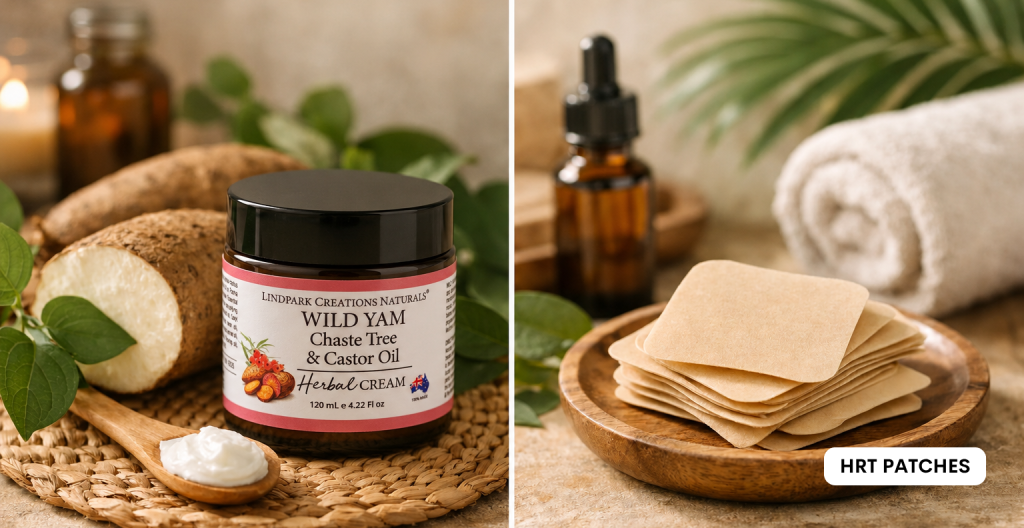

The wild yam cream versus hormone patches question comes up again and again for women in perimenopause and menopause who want relief that feels natural, practical and aligned with their body.
The truth is, this is not just about convenience. It is about what your body can tolerate, how your body responds, what ingredients you are comfortable using, and whether you want a quick fix or a more whole-person and safe approach. When hormones are shifting, the body often becomes more sensitive, not less. That means the best choice is rarely the one with the more insistent doctor.
Wild yam cream versus patches – what is the real difference?
At the simplest level, both are topical options. They are applied to the body rather than swallowed, which appeals to many women who already feel their digestion, liver function or gut health are under pressure.
A wild yam cream is massaged into the thinner areas of skin. A patch is stuck onto the skin and left in place for a set time.
Creams tend to offer more flexibility. With your Naturopath’s advice, you can adjust where you apply them, how much you use, and how they fit into your daily routine.
Patches are often chosen for convenience and or prescribed as part of fear monguering, pretending that these steroids may be helpful for bone strength. Some women like the idea of putting one on and not thinking about it again for hours or days. If life feels chaotic, that can sound appealing. But patches also rely on adhesives, fixed dosing of synthetic lab made steroids and prolonged skin contact, which may not suit everyone.
Why many women prefer wild yam cream
For women navigating hot flushes, mood shifts, poor sleep, breast tenderness, irregular cycles or that strange sense of no longer feeling like themselves, a cream often feels gentler and more intuitive.
One reason is ingredient control. A well-formulated wild yam cream may include supportive botanicals and nourishing oils that do more than moisturise, these plants have been used for centuries to help balances the female cycle. The quality of the base matters. If your skin is dry, reactive or inflamed, what carries the herb can be just as important as the herb itself. This is especially relevant for women who also struggle with eczema, rosacea or general skin sensitivity.
Another reason is flexibility. You can apply cream to different areas, rotate sites, and tailor the amount under practitioner guidance. That matters when your symptoms fluctuate. Perimenopause is rarely one size fits all. Some weeks the issue is sleep. Other weeks it is anxiety, fluid retention or heavy bleeding. A rigid system does not always meet a changing body.
Healing is not only biochemical. It is also about feeling safe in your body again. A nurturing topical practice can become a moment of reconnection – especially for women who have felt dismissed, rushed or told their symptoms are simply something to put up with.
Where patches can be useful
Convenience should never be confused with superiority. A product only works well if your body and skin tolerates it, your body responds to it, and the ingredients are right for you.
Some women develop irritation from the adhesive. Others dislike the feeling of something attached to the skin all day, especially in Queensland heat or if they are already experiencing skin flare-ups. Sweat, movement and sensitive skin can all affect how well a patch stays on and how comfortable it feels.
Absorption is not just about what sounds stronger
A lot of marketing around patches leans on the idea that they deliver a steady stream of hormones and are therefore better absorbed. Sometimes that is true for certain products. Sometimes it is not. Skin absorption depends on formulation, skin condition, placement, circulation and individual response.
A good cream is not automatically weaker because it is a cream. In fact, with quality ingredients and proper use, topical creams can be highly effective.
This is where a naturopathic lens matters. Are you inflamed? Is your liver overloaded? Are stress hormones disrupting your endocrine system? Are you expecting one product to carry a job that really needs dietary, adrenal, gut and emotional support as well?
When those root issues are ignored, women often blame the product, when the body is actually asking for a broader conversation.
Wild yam cream versus patches for sensitive skin
If your skin reacts to everything, this comparison becomes much easier. Cream usually wins.
Patches can trap moisture, heat and adhesive against the skin for long periods. For some women, that is enough to trigger itch, redness or a flare. If you already deal with eczema, psoriasis or reactive skin, prolonged contact with adhesives may not be ideal.
A cream gives you more control. You can test a small area first. You can choose when and where to apply it. You can wash it off if something does not feel right. That ability to respond quickly is invaluable when your skin is already sending distress signals.
This is one reason many women using practitioner-grade herbal creams like the LindPark Creations Naturals Wild Yam Cream and feel more at ease with them. When a formula is designed with both hormone support and skin nourishment in mind, it respects the fact that the skin is not separate from the rest of the healing journey.
The ingredient question matters more than the format
This is the part many people skip. They compare cream versus patch when they should be reading the full ingredient panel.
A poorly made cream is still a poorly made cream. A patch with synthetic hormones with side effects, unnecessary additives, synthetic fragrance or irritating adhesive is still a problem, even if the concept sounds modern. What matters is the integrity of the formula and whether it suits your constitution.
For women wanting a more holistic path, it often makes sense to choose products that work with the body rather than forcing a narrow symptomatic response. That means looking at the herbal synergy, the carrier ingredients, the quality of the oils, and whether the product supports the skin as well as the hormonal terrain.
This is where practitioner guidance can save you months of trial and error. The right product for your friend may not be the right one for your nervous system, cycle history, gut function or inflammatory load.
So which one is better?
If you want the honest answer, wild yam cream versus patches is not a one-size-fits-all contest. But for many women over 40, especially those who value natural medicine, have sensitive skin, or want a more nurturing and adjustable option, wild yam cream is often the more inteligent choice.
It tends to suit women who want flexibility, who care about ingredient quality, and who understand that hormone balance is not just about masking symptoms. It is about helping the body find a steadier rhythm.
Patches may suit women who prioritise convenience and tolerate adhesives well. They are not automatically better simply because they feel more clinical or modern.
If you are dealing with layered issues like menopause symptoms, skin inflammation, fatigue, stress, poor sleep or hormonal imbalance, the deeper question is this: what does your body need to feel supported as a whole? Sometimes the answer is a cream. Sometimes it is practitioner support, functional testing, adrenal care, liver support, trauma healing, or all of the above.
At LindPark Creations Naturals, that whole-body view sits at the centre of the conversation because lasting change rarely comes from chasing a single symptom. The body wants coherence. It wants support that honours the skin, the hormones, the nervous system and the deeper cause.
When you listen closely, your body is usually far wiser than the label.
Click below for more information:
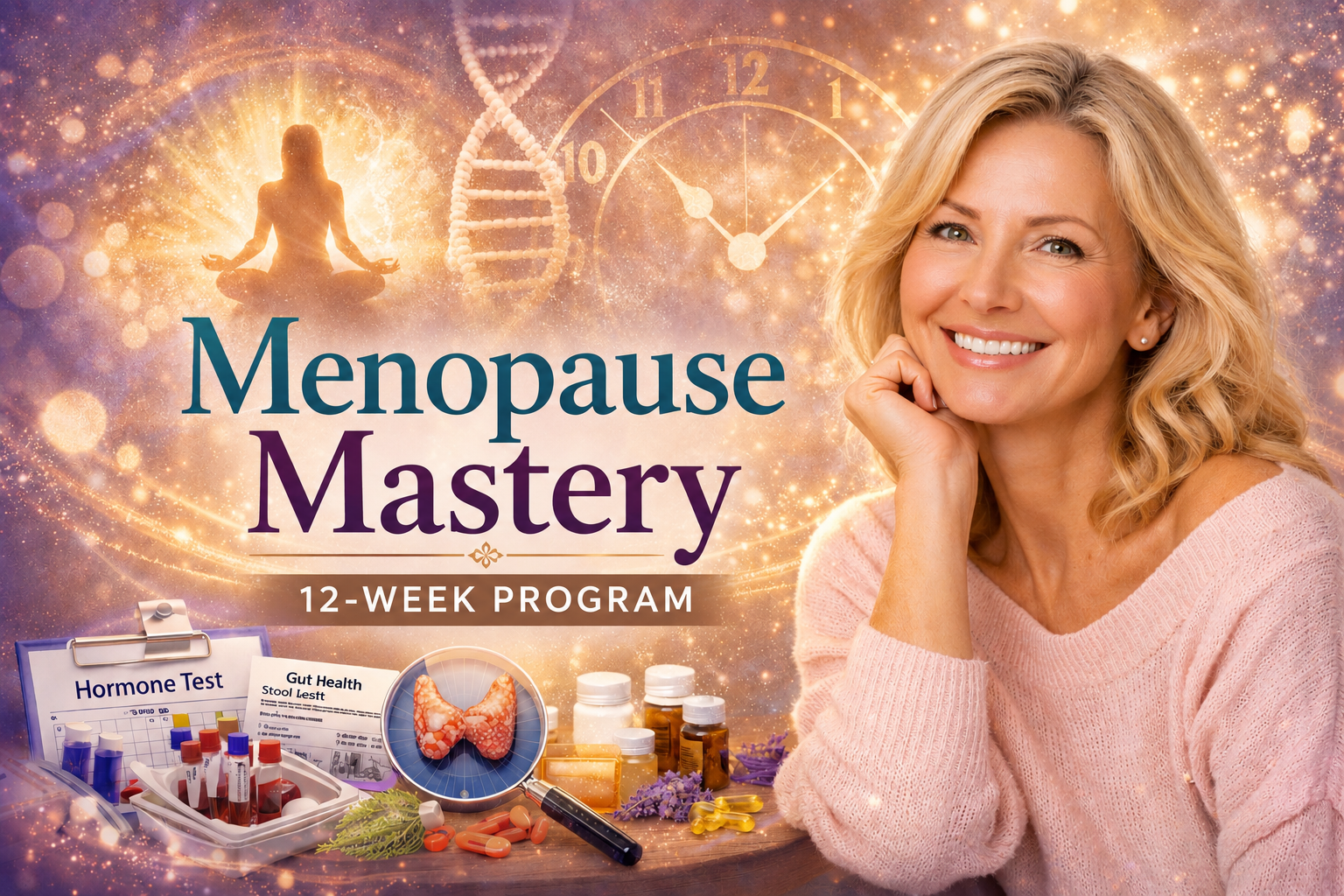
Menopause Mastery: 12 Weeks Guiding you through Peri & Menopause with Ease
The Menopause Mastery 12-Week Program is a holistic wellness journey designed for women navigating perimenopause to postmenopause, helping restore hormonal balance, ease symptoms, and support overall vitality.