

When your cycle changes, you keep waking up at 3 am, your skin flares up for no obvious reason, or you feel anxious or sad month after month, it is rarely just one hormone behaving badly.
Herbal tinctures for hormone balance can be a powerful part of healing, but only when they are chosen for your individual symptoms, and your stage of life – not because a trend told you to take the same herb as everyone else.
That distinction matters. Hormones do not work in isolation. Oestrogen, progesterone, cortisol, insulin and thyroid function all influence each other. So do the gut, liver, nervous system and inflammatory load.
If you find the cause you find the cure.
That is why the best herbal support is never about forcing the body. It is about guiding it back towards regulation.
What herbal tinctures for hormone balance actually do
A tincture is a concentrated liquid herbal extract designed for easy absorption and flexible dosing. In practice, that makes tinctures especially useful when symptoms change across the month or when a Naturopath wants to combine herbs for a more personalised result.
The idea is not that herbs replace your body’s intelligence. The right herbs support it. Some herbs help the nervous system calm down so cortisol stops driving chaos. Some support liver pathways involved in hormone metabolism. Others help with cycle irregularity, fluid retention, mood swings, hot flushes or the feeling that your whole system is out of rhythm.
This is where women often feel relieved. You do not have to choose between ignoring symptoms and using a one-size-fits-all solution. Herbal medicine can be nuanced. It can meet you where you are.
Why one person’s hormone herb can be another person’s mistake
This is the part social media tends to miss. A herb that helps one woman with PCOS may aggravate another. A tincture that settles menopausal symptoms beautifully in one case may not touch the symptoms if the deeper issue is thyroid dysfunction, blood sugar imbalance, chronic stress, poor sleep, or an overloaded gut-liver axis.
Take the common idea of boosting progesterone or lowering oestrogen. It sounds simple, but symptoms overlap. Heavy periods, breast tenderness, irritability, anxiety, acne, waking in the night, weight changes and hair shedding can show up in different hormonal patterns.
That is why the question is not, what is the best herb for hormones? The real question is, what is driving your imbalance?
The main patterns herbal tinctures can support
Stress-driven hormone disruption
This is one of the biggest hidden drivers behind hormonal symptoms, especially in women who are holding everything together for everyone else. When cortisol stays elevated, progesterone can drop, sleep quality suffers, blood sugar becomes less stable, and skin inflammation often gets louder.
In this picture, herbs traditionally used as nervines and adaptogens may be more useful than herbs aimed narrowly at reproductive hormones. If your body is stuck in survival mode, it will struggle to ovulate well, detoxify efficiently and repair properly. Calming the stress response is not a side issue. It is often the starting point. In cases of persistent stress-driven hormone disruption, adaptogenic support such as Withania (Withania somnifera) herbal tincture or calming nervines like Relaxation herbal tincture may help regulate the stress response.
PMS, irregular cycles and peri-menopausal changes
For some women, the body needs support with cycle regulation, fluid movement, mood changes or breast tenderness. For others in perimenopause, symptoms may include shorter cycles, heavier bleeding, rage that feels unfamiliar, night waking, anxiety, headaches or sudden skin flare-ups.
This is where herbal tinctures can be helpful, particularly when dosing is adjusted according to symptom timing. But perimenopause is a shifting landscape. What works six months from now may need changing. The body is not failing. It is transitioning, and that transition deserves intelligent support.
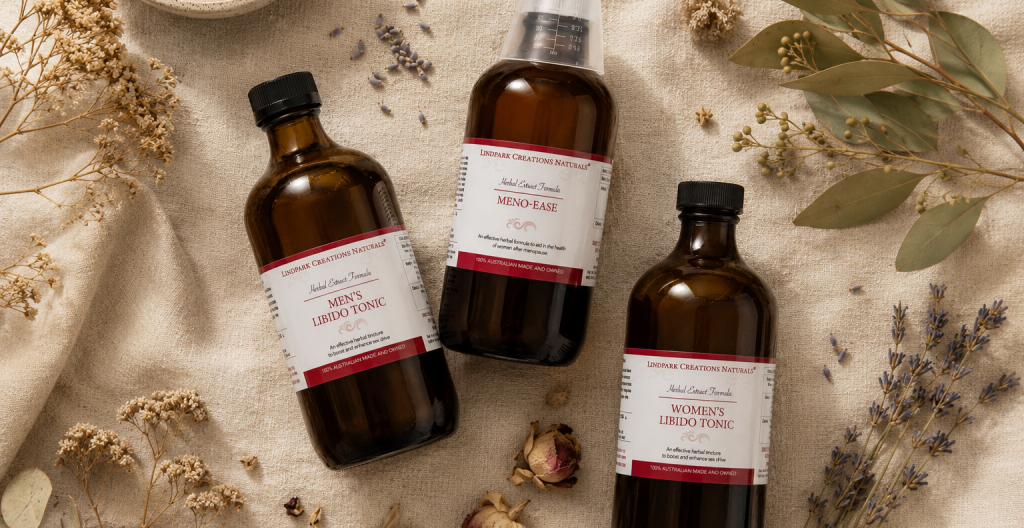
For cycle-related hormonal fluctuations, herbal tinctures such as Chaste Tree (Vitex) herbal tincture are traditionally used to support hormonal rhythm, while formulas like Meno-Ease herbal tincture may support women transitioning through perimenopause.
PCOS and insulin-related hormone imbalance
With PCOS, the conversation needs to include insulin, inflammation and often androgen excess. That might look like acne along the jawline, scalp hair thinning, irregular periods, stubborn weight gain or increased facial hair. In these cases, herbs may help, but they usually work best alongside blood sugar support, anti-inflammatory nutrition, gut repair and a realistic plan for stress and sleep.
This is also why isolated self-prescribing can disappoint. If insulin is the loudest driver and you only target the cycle, the deeper imbalance remains active.
In cases where the body appears to be carrying a higher level of internal microbial or inflammatory burden, broader herbal support may sometimes be considered alongside hormone and metabolic strategies. One example is the Antiviral, Antiparasitic and Antibacterial herbal tincture, traditionally used by Western herbal practitioners to support immune balance and help the body respond to a range of microbial stressors, while also supporting overall system resilience.
Menopause support
Menopause is not a deficiency of femininity. It is a profound hormonal recalibration. Herbal tinctures may help with hot flushes, mood changes, sleep disruption and nervous system depletion, but not every woman wants or needs the same kind of support.
Some do well with herbs traditionally used for vasomotor symptoms. Others need liver support, adrenal support, mineral support or help with the emotional load that this life stage can bring. Menopause is physical, yes, but it is also energetic. Many women know in their bones that they are being asked to live differently. Formulas such as Meno-Ease herbal tincture are often used to support women through this transition, particularly for symptoms like hot flushes, emotional fluctuations and sleep disturbance.
Herbal tinctures for hormone balance and skin health
For this audience, the skin connection matters. Hormonal shifts can show up as acne, rosacea flares, eczema aggravation, dryness, itchiness or delayed healing. If the skin is speaking, it is worth listening.
When hormones become dysregulated, the body often shows signs through inflammation, altered sebum production, histamine activity, poor detoxification, or changes in the microbiome. A tincture can support part of that picture, but skin healing usually requires a broader view. Gut function, food reactions, liver clearance, stress load and topical irritants all matter.
This is why a root-cause approach gets stronger outcomes. The goal is not to silence the skin. The goal is to understand what it is trying to tell you.
For hormonal skin concerns such as acne, rosacea flares, eczema aggravation or persistent dryness, support often needs to go beyond surface-level care. In practice, herbal support like Skin herbal tincture is sometimes used to help address the internal patterns that contribute to skin imbalance, particularly when inflammation, digestion and hormonal fluctuations are all interacting at once.
What to look for in a quality tincture
Not all tinctures are created equally. The herb itself matters, but so does extraction quality, the part of the plant used, concentration, freshness and whether the formula is actually suited to your presentation.
A quality tincture should feel purposeful, not generic. You want herbs selected for a reason, not because they are popular. The form also matters. Some people do brilliantly with tinctures because they absorb well and can be adjusted drop by drop. Others may need capsules or powders if they are sensitive to alcohol or struggle with taste.
The right format is the one your body tolerates and your life can sustain. There is no prize for choosing the most complicated protocol.
When herbal support should be personalised
There are times when DIY hormone support is not enough. If your periods are extremely heavy, absent, painful or suddenly different, if you have severe acne or hair loss, if your sleep is chronically broken, or if your mood feels volatile and unfamiliar, proper assessment matters.
The same is true if you are in perimenopause and feel as though your body has become unrecognisable, or if you have been told everything is normal while your symptoms clearly are not. Normal ranges do not always mean optimal function. You deserve a deeper look.
This is where practitioner guidance can save time, money and emotional wear. A skilled naturopath is not just matching a herb to a symptom. They are looking at your whole terrain – your cycle, digestion, stress response, skin, history, inflammatory load and the patterns your body has been repeating for years.
What real hormone healing often requires
Herbs can be transformative, but they work best inside a wider healing plan. Sometimes the biggest shift comes from supporting elimination, improving protein intake, stabilising blood sugar, repairing the gut lining, reducing inflammatory triggers, or helping the nervous system come out of chronic alarm.
At Elevata Wellness Centre in Montville, Linda Marion Parker ND, treats the individual. Not chasing symptoms. Not masking them. Listening to the body with enough skill and care to understand what it has been asking for all along.
Healing hormones is rarely about overpowering your biology. It is about restoring communication across the whole system so your body no longer has to shout through pain, fatigue, skin flare-ups or mood swings. When you honour that message, real change becomes possible.