

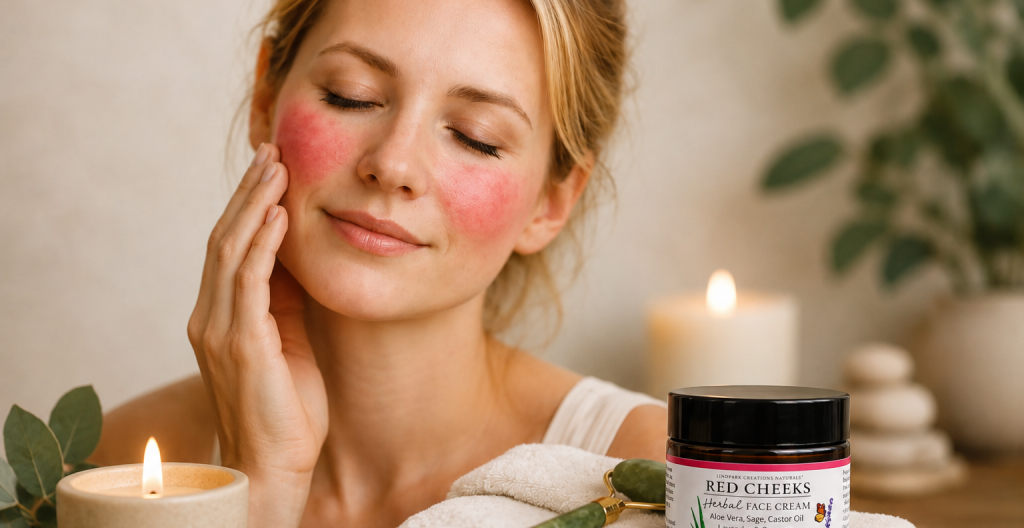

Some rosacea flare-ups seem to arrive out of nowhere. You wake up flushed, your skin feels hot and tight, and even your usual moisturiser suddenly stings. If you are trying to calm rosacea skin naturally, the first truth is this – your skin is not overreacting for no reason. It is signalling that something deeper is driving inflammation.
For many women (and men) rosacea is not just a skin deep issue. It often signals hormone shifts, gut stress, poor sleep, heightened nervous system load and a body that is already inflamed. When you understand that, you stop fighting the skin and start supporting the whole person. That is where Naturopathic treatment begins.
Why rosacea and red cheeks happen in the first place
Rosacea-prone skin has a more reactive barrier and a stronger inflammatory response. That means heat, spicy foods, alcohol, stress, wind, harsh products and hormone changes can set off redness far more easily than they would in balanced skin. But the trigger is not always the root cause.
In clinic, recurring rosacea often shows up in women who are also dealing with digestive issues, adrenal strain, menopausal flushing, immune dysregulation or a history of long-term skin sensitivity. This is why a cream alone may soothe the surface but not fully settle the cycle. If you find the cause, you find the cure.
Sometimes the trigger is obvious. A glass of red wine, cold wind, humidity, a hot yoga class or an active skincare product can bring on a flare quickly. Other times it is cumulative. Weeks of poor sleep, emotional strain, processed foods and hormonal instability can lower your threshold until the skin finally expresses what the body has been carrying.
How to calm rosacea flare naturally when skin is angry
When your face feels hot, blotchy or irritated, the priority is to reduce the inflammatory load. This is not the time to experiment with acids, scrubs or ten-step routines. Rosacea likes simplicity.
Start with temperature. Keep the skin cool or tempid, not icy. Splashing with very cold water can be too shocking for some people, but lukewarm water or a cool compress can help take the heat out gently. Avoid hot showers over the face, saunas and standing over steaming pots in the kitchen while the flare-up is active.
Next, strip your skincare right back. Use a very gentle cleanser if needed, something like our Acne Cleanse & Tone Herbal 2-in-1, or simply rinse with lukewarm water in the morning if your skin is dry and reactive. Follow with a moisturiser that is completely natural, fragrance-free and calming. If a product stings, that is useful information. During a flare, your skin needs less, not more.
Make-up can also be irritating when the barrier is compromised. If you can give your skin a rest for a day or two, do it. If not, choose the simplest mineral-based option you tolerate well and remove it gently.
Food matters too, especially in the middle of a flare. Keep meals anti-inflammatory and soothing. Think cooked vegetables, clean protein, healthy fats and plenty of filtered water. This is not about perfection. It is about lowering the body’s heat and burden.
Alongside gentle skincare and anti-inflammatory lifestyle support, some people benefit from targeted herbal support to help calm the internal drivers behind facial redness. Our Red Cheeks Herbal Tincture is a practitioner-formulated blend designed to support skin prone to redness and irritation by addressing the body from within.
Alcohol, chilli, caffeine, chocolate, heavily processed foods and excess sugar often make an active flare worse.
The skin barrier must heal before the redness settles
One of the biggest mistakes people make is they exfoliate, dry the skin out, throw strong actives at it and end up with more burning, more redness and more frustration. Rosacea skin usually needs barrier repair before it needs correction.
Your skin barrier is your protection. When it is damaged, water escapes, irritants get in more easily and nerve endings become more reactive. That is why ordinary products can suddenly feel unbearable. Gentle cleansing, consistent moisturising and avoiding overuse of active ingredients are not basic steps. They are foundational medicine for reactive skin.
If your rosacea exists with dryness, eczema tendencies or menopause-related skin changes, barrier support becomes even more important. Mature skin already produces less oil and can be slower to recover. Respecting that biology helps the skin feel safe again.
Hormones can be a hidden piece of the puzzle
Many women notice their rosacea occurs in their 40s and 50s. That is not a coincidence. Oestrogen fluctuations can affect blood vessels, temperature regulation, skin hydration and inflammation. Hot flushes and facial flushing can overlap, feeding the cycle.
This is one reason rosacea can feel more stubborn in perimenopause and menopause. Your triggers may be the same, but your resilience is not. A poor night’s sleep, a stressful week or a hormonal wobble can be enough to tip the skin into a flare.
Supporting hormonal balance naturally can make a meaningful difference, particularly when rosacea sits alongside other symptoms like mood swings, night sweats, irregular cycles, breast tenderness or fatigue. This is where a whole-body approach matters. The skin is often the messenger, not the main problem.
Gut health and rosacea are more connected than most people realise
If your rosacea comes with bloating, reflux, constipation, loose stools or food sensitivities, pay attention. The gut and skin are deeply linked via the gut-skin axis.
A disturbed gut environment can increase systemic inflammation and immune reactivity, which may show up as facial redness, irritation and sensitivity.
In some people, certain foods are obvious triggers. In others, it is less about one food and more about a gut that is already overwhelmed. Eating in a calmer, more regular way can help. Slow down at meals. Chew properly. Reduce highly processed foods. Notice whether dairy, gluten, alcohol, caffeine, spicy meals or histamine-rich foods leave your skin hotter the next day.
There is no one-size-fits-all rosacea diet, and that matters. Over-restricting can create stress and confusion. The goal is not to fear food. It is to observe patterns and support digestion so the body is less inflamed overall.
Stress is not just emotional – it is inflammatory
If your rosacea worsens when life feels too much, you didn’t make that up!
The nervous system and skin are in constant conversation. Emotional stress can increase flushing, heat, itching and inflammation, especially in already sensitive skin.
This is why calming rosacea naturally often includes calming the body. Linda Parker the Skin Naturopath will use the perfect herbal tincture in which to help the nervous system. Plus, deep breathing, slower mornings, better boundaries, walking in nature, the EE System scalar wave therapy, restorative rest and nervous system support all count. Healing is not only about what you apply. It is also about the internal environment you create and your connection to self.
For some people, frequency-based wellness support such as the EE System, can feel deeply restorative as part of a broader program, especially when chronic inflammation and fatigue are part of the picture. What matters most is choosing support that helps your body shift out of survival and into repair.
When natural support works best – and when you need more help
Natural care can be powerful, but it works best when it is personalised. If your rosacea is mild and mainly triggered by obvious lifestyle factors, you may see solid improvement from gentle skincare, anti-inflammatory food choices, stress reduction and hormone support.
If your skin is persistently inflamed, painful, pustular or affecting your confidence daily, it is worth getting a more complete assessment. Rosacea can overlap with other conditions, and long-standing flares usually need more than guesswork. A practitioner-led approach (with functional testing) can help identify whether your pattern is being driven by gut dysfunction, menopause, immune imbalance, product overload or a combination of all four.
This is where experienced naturopathic care can change the trajectory. Instead of chasing the latest product, you begin to understand your triggers, your terrain and what your body has been asking for all along.
Linda Marion Parker ND, is an experienced Naturopath who specialises in treating chronic skin and hormonal conditions, especially Rosacea. This root-cause lens is crucial to get the job done.
Calm rosacea flare naturally with consistency, not panic
Rosacea responds best to steady support. Not urgency. Not harsh correction. Not six new products bought in frustration at 11 pm after another bad flare. The skin needs rhythm, and so does the body.
Give your routine time to work. Track your patterns. Notice what makes your face feel cooler, softer and less reactive over a period of weeks, not just hours. Respect hormonal shifts, support digestion, protect the skin barrier and reduce inflammatory triggers where you can.
There will be times when progress is not linear.
Weather changes, stress, menopause and food triggers can all stir things up again.
Your skin can repair itself. Your confidence can return. And often, the turning point comes when you stop trying to silence symptoms and start listening to what they are revealing.
Click below for more information:
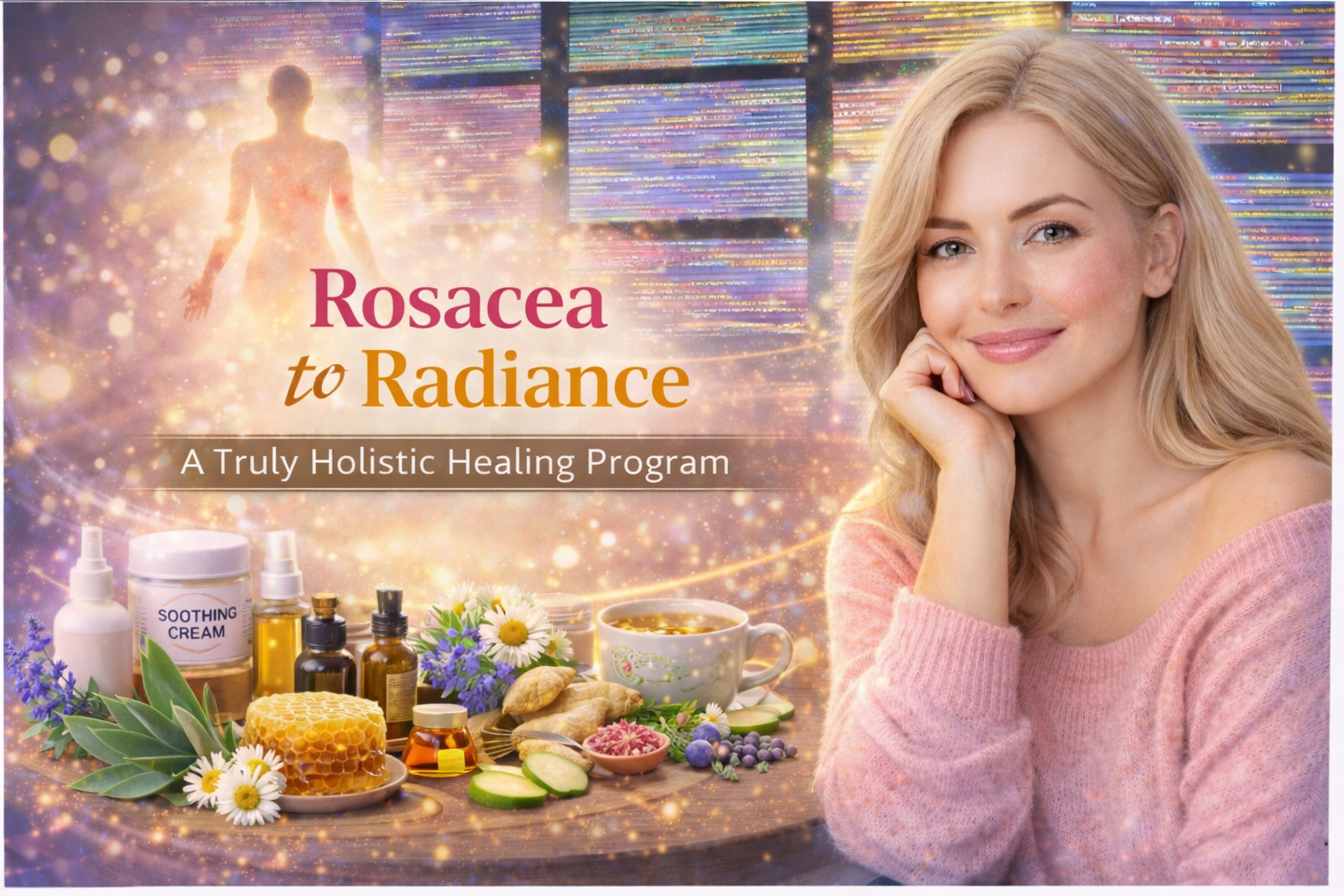
Rosacea to Radiance A Truly Holistic Healing Program
The Rosacea Relief 12-Week Program is a comprehensive skin wellness journey designed for people struggling with persistent rosacea, whether it has been mild, moderate, or severe for months or years.