
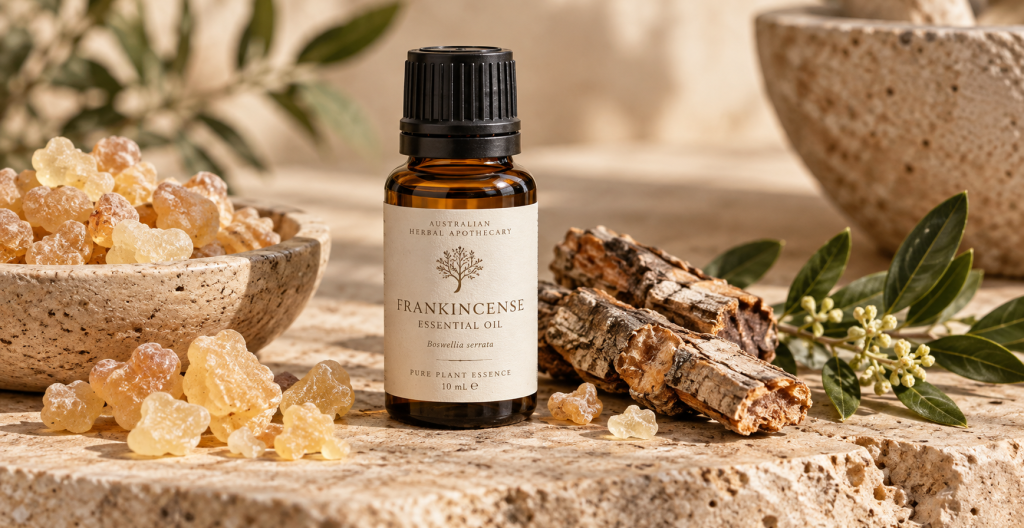

Frankincense was one of the gifts from the 3 Wise Men for baby Jesus. It represented Jesus’ divinity or priestly role.
Known for its warm, distinctive fragrance, this ancient botanical has been used across Ayurvedic, Middle Eastern, African and traditional Chinese medicine for a wide range of traditional applications.
One of the most well-known medicinal species is Boswellia serrata, also known as Indian Frankincense, Olibanum or Salai Guggul.
What Is Frankincense?
Frankincense is an aromatic oleo-gum-resin obtained by tapping the bark of trees belonging to the Boswellia genus.
In Ayurveda, Boswellia serrata is known as Salai Guggul and has traditionally been used for inflammatory and painful conditions, particularly arthritis, respiratory complaints and gastrointestinal inflammation. The resin has also traditionally been applied externally to wounds, ulcers and painful joints.
Traditional Herbal Actions of Frankincense
Traditionally, Frankincense has been used for a broad range of herbal actions, including:
- Potent anti-inflammatory
- Antirheumatic
- Analgesic
- Antioxidant
- Antimicrobial
- Astringent
- Expectorant
- Wound-healing
- Immune-modulating
- Nervine and grounding aromatic
These traditional properties help explain why Frankincense has been used in herbal medicine and aromatic practices for inflammation, respiratory wellbeing, skin support and general wellbeing.
Traditional Uses of Frankincense
Joint and Musculoskeletal Health
Frankincense has traditionally been used for arthritis, osteoarthritis, rheumatic pain, muscular stiffness and inflammatory joint conditions.
Its long-standing traditional use for painful and inflamed joints is also one of the areas that has attracted significant modern research interest.
Digestive and Gastrointestinal Health
Traditional herbal medicine has used Boswellia serrata for inflammatory conditions affecting the gastrointestinal tract.
The resin has historically been prepared and used to support digestive wellbeing and inflammatory digestive complaints.
Respiratory Health
Frankincense has traditionally been used for respiratory inflammation, asthma, bronchitis and catarrh.
Its aromatic qualities have also made Frankincense an important part of traditional preparations and ceremonial practices associated with clear breathing and relaxation.
Skin and Wound Care
Historically, Frankincense resin was applied externally to minor wounds, ulcers and inflammatory skin conditions.
Its traditional astringent, antimicrobial and wound-supportive properties have contributed to its use in various topical preparations.
Oral and Gum Health
Frankincense has also traditionally been chewed or prepared medicinally to support oral and gum health.
Women’s Health
Traditional uses of Frankincense have included support for menstrual discomfort and women’s reproductive health.
Healthy Ageing and Wellbeing
Frankincense has traditionally been valued as part of practices supporting healthy ageing, emotional wellbeing, meditation and spiritual wellbeing.
Its warm, grounding and masculine aroma has long been associated with relaxation, contemplation and creating a peaceful environment.
Frankincense Featured in our Men’s Vitality Cream
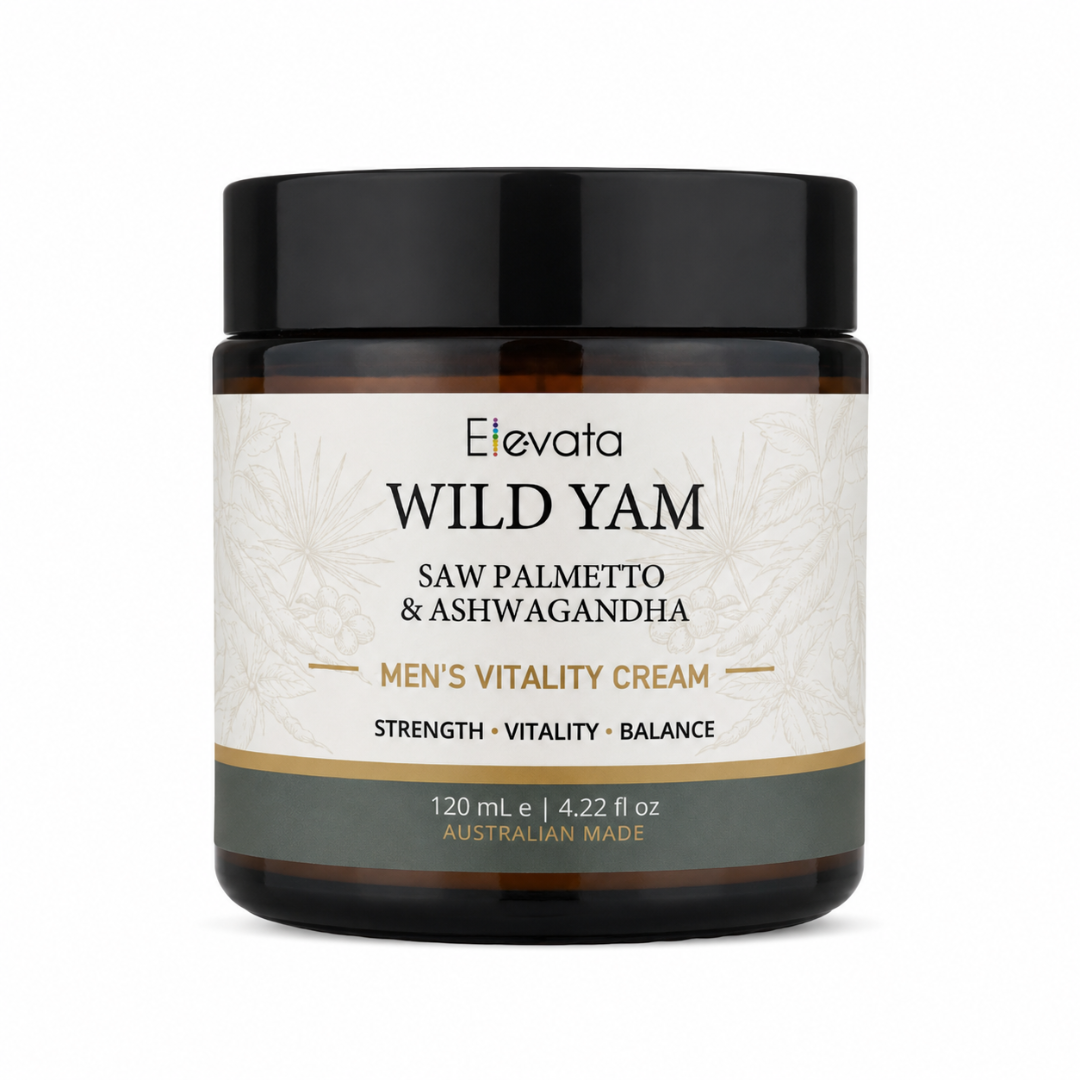
Frankincense essential oil is combined with other traditional herbs and nourishing oils in the Wild Yam Saw Palmetto & Ashwagandha – Men’s Vitality Cream.
Created especially for men navigating the demands of modern life and the natural changes that can occur with age, this rich yet easily absorbed body and face cream combines:
- Wild Yam
- Saw Palmetto
- Ashwagandha
- Castor Oil
- Frankincense essential oil
The formula is designed to moisturise dry, tired-looking skin while turning everyday skincare into a grounding vitality ritual.
For men over 40, it can be massaged into the skin each morning and take a moment to slow down, reconnect with yourself and reset before beginning the day.
Explore the Wild Yam Saw Palmetto & Ashwagandha – Men’s Vitality Cream to discover how this traditional herbal blend can become part of your daily wellness.
What Makes Frankincense Special?
One of the most researched components of Boswellia serrata is a group of naturally occurring compounds known as boswellic acids.
These include:
- Beta-boswellic acid
- Acetyl-beta-boswellic acid
- 11-keto-beta-boswellic acid
- Acetyl-11-keto-beta-boswellic acid (AKBA)
- Lupeolic acids
- Tirucallic acids
Boswellic acids have been studied for their influence on inflammatory pathways, particularly pathways involved in the production of leukotrienes. This research may help explain some of the traditional applications of Frankincense for inflammatory and painful conditions.
Frankincense and Modern Cancer Research
Frankincense is also being investigated as a complementary botanical medicine in cancer research, particularly through standardised Boswellia extracts and isolated boswellic acids.
Laboratory research suggests that these compounds may influence inflammatory signalling, cancer-cell proliferation, apoptosis (programmed cell death), angiogenesis and pathways involved in tumour invasion.
A small Phase LA clinical study involving women awaiting surgery for breast cancer found that oral Boswellia serrata extract was well tolerated and was associated with a statistically significant reduction in a marker of tumour-cell proliferation. This was an encouraging early finding, but the study involved only a small number of patients and was not designed to determine whether Boswellia improves survival or prevents recurrence.
Read the published clinical study
Boswellia has also been studied for peritumoral cerebral oedema, which is swelling surrounding brain tumours, particularly in people undergoing radiotherapy. Some clinical evidence suggests that oral Boswellia extract may help reduce this inflammatory swelling. Importantly, this does not mean that Boswellia has been shown to shrink or cure brain tumours.
European Medicines Agency information on Boswellia serrata
Topical Boswellia preparations have also been investigated for their potential to help reduce skin inflammation and dermatitis associated with breast radiotherapy.
Frankincense essential oils and boswellic acids have demonstrated activity against various cancer-cell lines in laboratory studies, including breast, bladder, pancreatic, prostate, colon and brain cancer cells. These findings are scientifically interesting, but further research is needed to determine their significance in humans.
Frankincense Through History
Frankincense has a remarkable cultural and spiritual history.
Ancient Egyptians burned Frankincense in temples, incorporated it into perfumes and cosmetics, and used it in preparations for the skin and wounds.
Across Middle Eastern and African traditions, Frankincense was burned to cleanse homes and sacred spaces, freshen the air and support spiritual practices.
Frankincense also holds an important place in Biblical history and Christian tradition, where it became associated with holiness, reverence and the divine. Its use in religious ceremonies, prayer and meditation continues today.
Its distinctive warm and resinous aroma has traditionally been believed to quieten the mind, deepen breathing and encourage contemplation, making Frankincense a valued aromatic for meditation and spiritual wellbeing.
An Ancient Resin with a Continuing Story
From ancient temples and Ayurvedic medicine to modern scientific laboratories, Frankincense has maintained a remarkable place in traditional healthcare and cultural practices.
Its traditional history spans joint and muscular wellbeing, respiratory and digestive health, skin care, oral health, women’s wellbeing and spiritual practices.
Modern research, particularly into compounds such as boswellic acids and AKBA, continues to investigate how the constituents of Frankincense may interact with inflammatory and other biological pathways.
While further clinical research is needed to establish the effectiveness of Frankincense for specific health conditions, its thousands of years of traditional use combined with ongoing scientific investigation make this ancient resin an intriguing botanical worthy of continued study.