

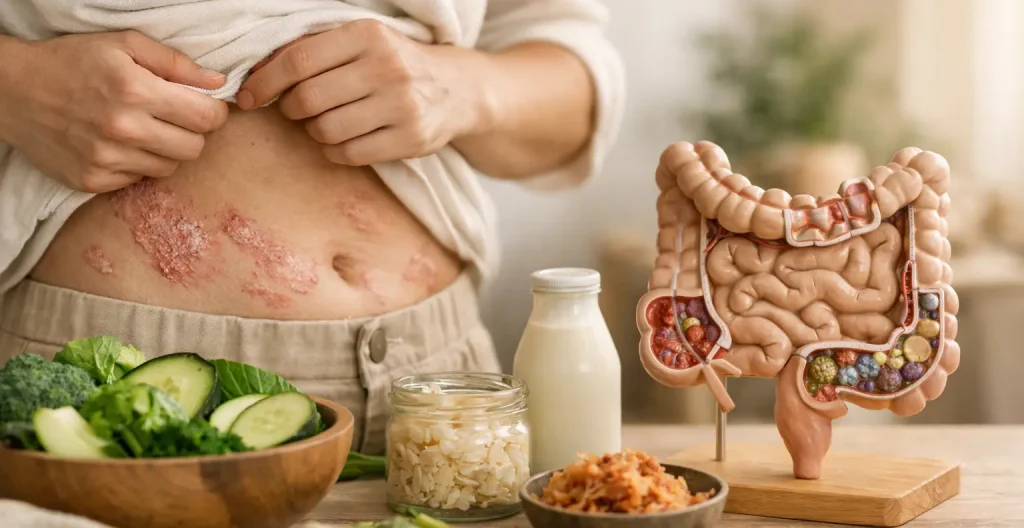

When psoriasis keeps flaring up, no matter how carefully you manage your skin, it can feel like your body is fighting you from the inside. That is why the psoriasis gut health connection has become such an important conversation in natural medicine. For many people, the skin is not the starting point. It is the signal or sign.
Symptoms are an expression of something wrong on the inside.
Psoriasis is an immune and nerve-driven inflammatory condition, and your gut plays a major role in immune regulation. A large part of the immune system sits in and around the digestive tract, constantly interacting with food, microbes, stress hormones and inflammatory triggers. When gut function is under strain, the immune system can become more reactive. In some people, that reactivity shows up on the skin with psoriatic plaques and patches.
What the psoriasis gut health connection really means
The phrase can sound trendy, but the idea is quite practical. Your gut is not just a digestive tube. It is a complex ecosystem involving stomach acid, digestive enzymes, the gut lining, the microbiome, bowel motility, nervous system input and immune activity. When these systems are working well, they help maintain balance. When they are not, inflammation and toxicity can build.
In psoriasis, the immune system is already prone to overactivity. If the gut lining is irritated, if the microbiome is disrupted, or if digestion is inefficient, that can add fuel to an already inflammatory picture. This does not mean gut issues are the only cause of psoriasis. Stress, infections, medications, vaccinations, alcohol, metabolic health and environmental triggers can all matter too. But gut dysfunction is often one of the missing pieces.
This is where many people feel seen for the first time. They have been given creams, steroids or biologics, yet no one has asked about bloating, reflux, constipation, food reactions, a history of antibiotics or whether flare ups follow periods of stress. A root-cause approach asks those questions because they matter.
This issues are all covered in our Psoriasis Freedom 6- Month Program
Why the gut can influence the skin
There are a few key mechanisms behind the psoriasis gut health connection, and they tend to overlap rather than occur in isolation.
The microbiome and immune signalling
Your gut microbiome helps train the immune system. When beneficial bacteria are reduced and less helpful microbes become dominant, inflammatory signalling can shift. Research continues to explore how microbiome changes may be linked with psoriasis severity, but clinically, many people with chronic inflammatory skin issues also present with digestive imbalance.
That imbalance can be influenced by antibiotics, highly processed diets, high sugar, chronic stress, poor sleep, infections, low-fibre eating patterns and long-term digestive dysfunction. None of these automatically causes psoriasis, but together they can create an internal environment that is less stable and more inflammatory.
Gut lining integrity
The lining of the digestive tract acts like a selective barrier. It needs to allow nutrients through while keeping larger unwanted particles out. When that barrier becomes irritated or more permeable, and the normally tight junctions are forced open, the immune system can be exposed to substances it would rather not deal with. That may increase inflammatory load.
This is one reason naturopaths often look beyond the skin itself. If someone has psoriasis alongside bloating, loose stools, constipation, cramping or food sensitivity, it is worth exploring whether the gut lining needs support. In the Psoriasis Freedom 12 Month Program, we investigate at the very start the health of your microbiome with a Microbiome Mapping Stool Test, which is only one of many very important tests to finding the cause to the Psoriasis.
Digestion, detoxification and inflammatory load
Poor digestion can affect more than comfort after meals. If you are not breaking food down properly, or if bowel motions are sluggish, the body may carry a higher inflammatory burden. Liver function, bile flow and elimination also matter. Psoriasis is rarely just about one organ system. It is often about how multiple systems are coping under pressure.
Signs your gut may be involved in psoriasis flares
Not everyone with psoriasis has obvious digestive symptoms, so the picture is not always straightforward. Still, there are patterns that commonly suggest a gut component.
Bloating after meals, alternating constipation and diarrhoea, reflux, excessive wind, abdominal discomfort and strong food reactions are obvious clues. Less obvious signs can include fatigue after eating, sugar cravings, frequent antibiotic use, a history of gastro infections, recurrent thrush, brain fog or feeling inflamed all over rather than just on the skin.
Some people also notice their psoriasis worsens after alcohol, ultra-processed foods, long periods of stress or disrupted sleep. That does not prove the gut is the sole issue, but it often points to a deeper inflammatory pattern worth investigating.
A root-cause approach to the psoriasis gut health connection
This is where personalised care matters. A generic psoriasis diet won’t work and no magic supplement that works for everyone. A useful plan looks at your health story, your triggers, your digestion, your hormones, your stress load and your inflammatory drivers.
Then after all the functional testing is done and all this information is ascertained, Linda will devise a personalised target Psoriasis Diet for you. See more info in the Psoriasis Freedom Program.
Start with the terrain, not just the flare
When the skin is angry, flakey or itchy, it is tempting to chase the latest cream or quick fix. But real healing often begins by calming the inflammation naturally. That may involve removing obvious aggravators for a period, improving digestive function, reducing inflammatory load and supporting the body’s ability to repair.
For one person, the biggest issue may be alcohol and poor gut barrier function. For another, it may be chronic stress plus sluggish bowels and microbial imbalance. For someone else, hormonal changes in perimenopause may be amplifying inflammation and making psoriasis harder to settle. The point is not to guess. The point is to assess….and that’s what we do!
Food can help, but it must be individualised
Food matters, but broad restriction is not always the answer. Some people improve when they reduce alcohol, excess sugar, gluten or processed foods. Others need to identify dairy intolerance, histamine issues or simply start eating more fibre, protein and anti-inflammatory whole foods consistently.
Very restrictive diets can backfire if they create stress, nutrient gaps or fear around eating. A more therapeutic approach is to identify likely triggers, support digestion and then build a sustainable way of eating that lowers inflammation without becoming miserable.
Stress is not separate from gut health
This part is often underestimated. Stress changes digestion, affects the microbiome, alters bowel motility and can weaken gut lining integrity over time. Many people know their psoriasis worsens in stressful seasons, but they do not always realise the gut may be one of the pathways through which that happens.
Here at Elevata Wellness Centre, Linda will book you in for several EE System Scalar Wave sessions to address stress, anxiety, depression, and also reduce inflammation. This is also an important part of the Psoriasis Program.
Nervous system support, adequate sleep, rest and gentle regulation practices are not extras. They are part of treatment. If your body never feels safe enough to repair, healing becomes much harder.
What support may look like in practice
A practitioner-led plan may include dietary changes, digestive support, microbiome functional testing, food intolerance testing, hormone saliva testing and EE System sessions which can reduce inflammation. In others, a careful clinical history already reveals the major patterns.
The trade-off is that this work can take patience. We allow 6 months, which is a realistic time frame, especially if you’ve had Psoriasis for a long time.
Skin does not always clear overnight just because gut support has started. Psoriasis is often stubborn, especially when it has been present for years. But when the body is supported at the level of immune balance, digestion and inflammation, lasting changes become more possible.
This is also why a whole-person approach tends to get better results than symptom suppression alone. If you calm the plaques without addressing gut dysfunction, chronic stress, hormonal imbalance or inflammatory triggers, the pattern often returns.
When the psoriasis gut health connection needs a broader lens
Gut health can be central, but it is not the whole story for everyone. Sometimes psoriasis is being amplified by insulin resistance, unresolved infection, significant emotional stress, medication triggers or nutrient depletion. Sometimes scalp psoriasis is tied up with inflammation, hair changes and hormone shifts at the same time.
That is why experienced naturopathic care looks for the bigger pattern. Linda Marion Parker ND has built her work around this exact principle – treating chronic skin conditions as part of a wider health picture rather than as isolated surface problems. For people who feel exhausted by short-term fixes, that shift in perspective can be the beginning of real relief.
Linda even has a skin therapy range of creams, of which one is specifically there to help with psoriasis, called Plaques & Patches Herbal Cream. Because topical natural creams help dramatically from the outside in, whilst we work on the inside.
What to do next if this sounds like you
Do not assume psoriasis is only skin deep. Your body may be asking for a more complete protocol – one that includes the gut, the immune system, the nervous system and the everyday pressures that have been wearing you down for years.
Healing often begins when you stop asking how to silence the symptom and start asking why the inflammation is there in the first place. That question can change everything.