

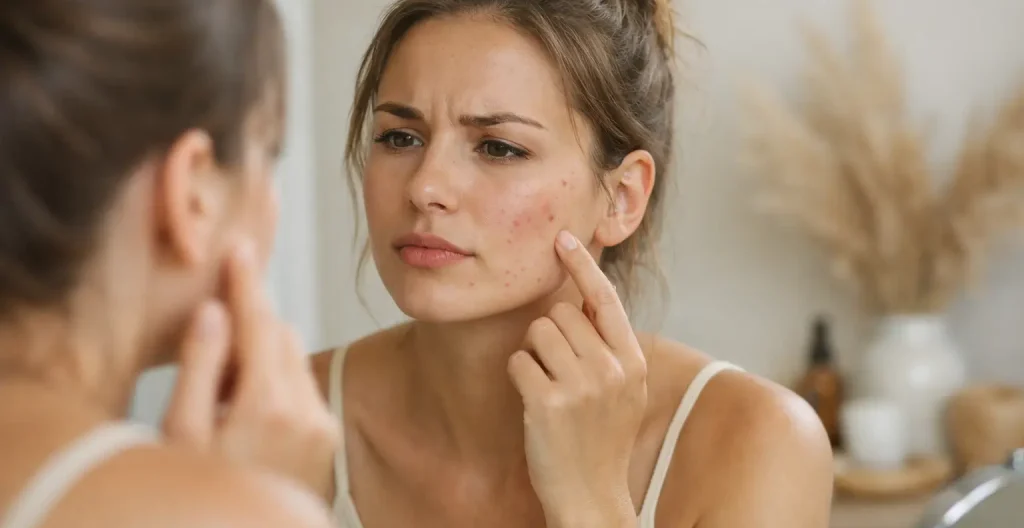

You can be eating well, using good skincare, drinking enough water, and still wake up to deep, sore breakouts around your chin and jaw. That is why so many women ask what causes hormonal acne in women, especially when it seems to flare without warning and linger far longer than a typical pimple should. The truth is, hormonal acne is rarely just a skin problem. It is often a signal that something deeper in the body is asking for attention.
What causes hormonal acne in women at a root-cause level?
Hormonal acne develops when internal signals increase oil production, change the way skin cells shed, and create the perfect environment for congestion and inflammation. For many women, the key driver is not simply “bad hormones” but an imbalance between hormones, stress chemistry, inflammation, liver function, and gut health.
And this is where many people feel frustrated. They are told to dry out the skin, cover the breakout, or go back on the pill, yet the pattern keeps returning. If the acne is cyclical, concentrated around the lower face, painful under the skin, or worse at certain times of the month, there is usually more going on than clogged pores.
Androgens and excess oil production
One of the biggest hormonal influences behind acne is androgen activity. Androgens are often thought of as male hormones, but women produce them too. When they are elevated, or when the skin becomes more sensitive to them, the sebaceous glands produce more oil. That extra oil can combine with dead skin cells and bacteria, leading to blocked pores and inflamed lesions.
This is why hormonal acne often shows up as cystic or tender breakouts on the chin, jawline and neck. It is not always about how much testosterone is in a blood test. Sometimes the issue is how your body is processing hormones or how your skin is responding to them.
Oestrogen and progesterone shifts
Women’s hormones are designed to move in rhythm. Across the menstrual cycle, oestrogen and progesterone rise and fall in a carefully timed dance. When that rhythm becomes disrupted, the skin can reflect it quickly.
Oestrogen generally supports skin health. It can help with hydration, collagen and a calmer complexion. Progesterone has more complex effects and, in some women, can contribute to swelling of the pores or changes in sebum. Just before a period, when hormone levels shift sharply, acne often flares. During perimenopause, this can become even more common because oestrogen may drop unpredictably while androgen influence becomes more noticeable.
Why stress can make hormonal acne worse
Stress is not just emotional. It is biochemical. When you are under prolonged pressure, the body produces more cortisol and other stress hormones. These can drive inflammation, affect blood sugar, alter sleep, impair digestion and increase oil production.
In clinic, this is one of the most common patterns behind stubborn acne in adult women. The skin is not simply reacting to one stressful week. It is responding to a body that has been in survival mode for months or years.
This matters because cortisol can also interfere with ovulation and hormone balance. So stress does not only worsen acne directly. It can contribute to the very hormone shifts that trigger it in the first place.
The sleep and nervous system connection
Poor sleep can intensify hormonal acne more than many women realise. When sleep is broken, the body has less opportunity to repair inflammation, regulate insulin, and clear stress hormones efficiently. If you are exhausted, wired at night, or waking unrefreshed, your skin may be carrying part of that burden.
For women who are highly sensitive, intuitive and carrying a lot emotionally, nervous system regulation is not a luxury. It is part of the healing plan.
Gut health, inflammation and the skin-hormone link
If you find the cause you find the cure. That principle matters deeply with hormonal acne because the skin often mirrors what is happening in the gut.
The digestive system helps regulate inflammation, absorb nutrients, support detoxification, and influence how hormones are metabolised and eliminated. If gut function is compromised, acne can become more persistent, more inflamed, and harder to shift.
Some women notice bloating, constipation, reflux, food sensitivities or irregular bowels alongside their breakouts. Others do not have obvious digestive symptoms at all. Even so, poor gut health can contribute to systemic inflammation and hormone recirculation.
The oestrobolome and hormone clearance
There is a growing understanding of the role the gut microbiome plays in oestrogen balance. Certain gut bacteria help regulate how oestrogen is processed and excreted. When that balance is off, oestrogen may be recirculated rather than cleared well.
That does not mean every woman with acne has “oestrogen dominance”, but it does mean hormone clearance matters. If the liver and gut are under strain, skin symptoms can become one of the body’s ways of showing it.
Blood sugar swings and insulin resistance
Another overlooked answer to what causes hormonal acne in women is unstable blood sugar. When glucose levels spike and crash, insulin rises. Elevated insulin can stimulate androgen production and increase oil output, which can aggravate acne.
This pattern is especially relevant for women with PCOS, but it is not limited to PCOS. Even women without a diagnosis can experience acne linked to insulin resistance, skipped meals, high sugar intake, poor sleep or chronic stress.
You do not need to live on salad leaves to improve this. In fact, under-eating can make stress chemistry worse. The goal is steadier nourishment, enough protein, fibre-rich whole foods, and a rhythm that supports the endocrine system rather than pushing it harder.
PCOS, perimenopause and other common triggers
Hormonal acne often has a life-stage component. In younger women, PCOS is a common driver, particularly when acne comes with irregular periods, excess hair growth, scalp hair thinning or weight changes. In women over 40, perimenopause can be a major trigger because hormone levels become less predictable and stress resilience often drops at the same time.
Then there are the women who break out after stopping the oral contraceptive pill. This can happen because the pill was suppressing symptoms rather than resolving the underlying imbalance. Once it is removed, the body has to find its own rhythm again. That transition can be bumpy, especially if liver function, gut health, minerals, or stress levels are already compromised.
There is no single cause for every woman. That is why cookie-cutter acne advice so often fails.
What causes hormonal acne in women besides hormones alone?
This is the question that changes everything. Hormones may light the match, but inflammation, nutrient depletion, poor detoxification, harsh skincare, food reactions, and unresolved stress often add fuel to the fire.
For example, zinc deficiency can affect wound healing and immune function. Low omega-3 intake may leave the body more inflamed. Over-cleansing and strong active skincare can damage the skin barrier, making acne angrier rather than calmer. Constipation can impair elimination. A history of antibiotics can shift the gut microbiome. Even environmental load can matter for some women.
So yes, hormones matter. But if treatment focuses only on suppressing hormones without asking why the body is out of balance, the root issue can remain untouched.
What actually helps?
Healing hormonal acne usually calls for a whole-body approach. That starts with understanding the pattern. When does the acne flare? Where does it appear? What is happening with your cycle, digestion, sleep, stress, and energy? Is there a PCOS picture, a perimenopause picture, or a post-pill picture?
From there, support may include blood sugar regulation, anti-inflammatory nutrition, gut repair, liver support, nervous system care, and targeted nutrients or herbal medicine. Skincare still matters, but it works best when it is part of a bigger strategy rather than the only strategy. Gentle, non-stripping skincare products such as the Acne Cleanse & Tone Herbal 2-in-1 and supportive moisturisers like the Cystic Acne & Scar Herbal Cream may help support a calmer, clearer-looking complexion while respecting the skin barrier.
There are trade-offs here. Some women want fast suppression because the acne is affecting confidence and quality of life, and that is understandable. Others are ready to do deeper root-cause work, knowing it can take time. Neither choice is wrong. The key is to be honest about whether the goal is short-term symptom control or long-term rebalancing.
For women who have felt dismissed, this can be deeply healing in itself. Your skin is not overreacting. Your body is communicating.
A thoughtful naturopathic approach can help connect those dots and create a plan that respects the skin, the hormones, the gut, and the woman as a whole. Linda Marion Parker ND has built her work around exactly that kind of root-cause care, because lasting change happens when the whole system is supported, not just the breakout.
If your acne keeps returning, do not make the mistake of seeing it as only a surface issue. Sometimes the breakout on your face is the message that finally invites real healing to begin.