

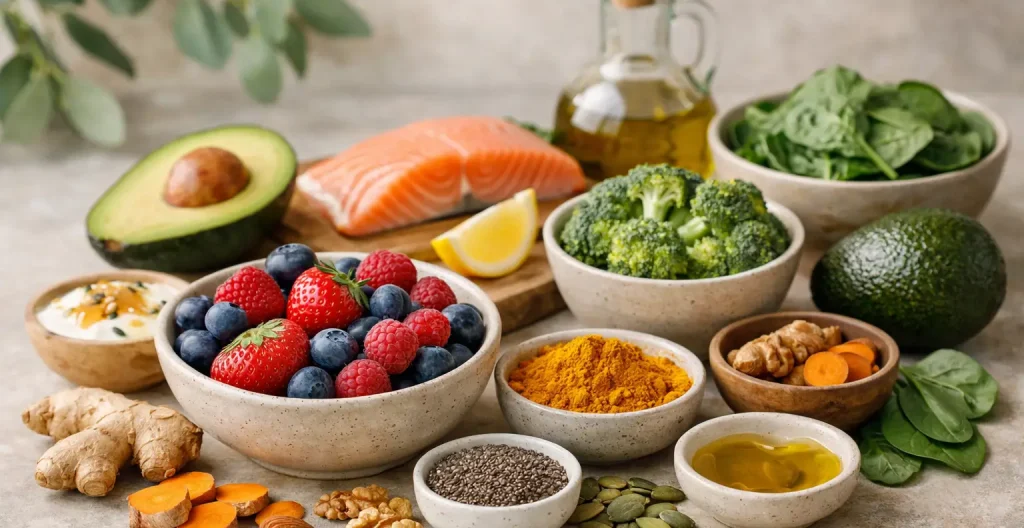

When your skin is red, itchy, breaking out, flaring with eczema or looking suddenly less vibrant through perimenopause, food is rarely the only factor. Yet it can be a powerful daily influence. The top anti inflammatory skin foods provide the fats, fibre, polyphenols and minerals your body uses to support the gut, immune system, hormones and the skin barrier from within.
This is not about chasing a perfect diet or blaming yourself for a flare. Skin conditions are complex. Stress, sleep, hormones, medications, allergens, blood sugar, digestive health and nutrient status all matter. But a nourishing plate can lower the inflammatory load and give your body more of what it needs to repair.
Why food can show up on your skin
Your skin is not separate from the rest of you. It is an active immune organ, a barrier and a reflection of what may be happening deeper in the body. Chronic inflammation can affect the skin barrier, increase oxidative stress and influence inflammatory pathways involved in conditions such as psoriasis, acne and eczema.
For women in their 40s and beyond, changing oestrogen levels can also bring dry skin, slower collagen turnover, hot flushes, disrupted sleep and a greater tendency towards insulin resistance. For men, metabolic health, stress and inflammation can influence energy, skin ageing and overall vitality too. Food cannot replace individual clinical care, but it is one of the most practical places to begin.
The top anti inflammatory skin foods to put on your plate
1. Oily fish
Salmon, sardines, mackerel and trout are rich in omega-3 fats, particularly EPA and DHA. These fats are used by the body to create compounds that help regulate inflammation. They also support the lipid layer of the skin, which is essential when dryness, sensitivity or compromised barrier function are part of the picture.
Research on omega-3s has shown promising benefits for inflammatory markers and some skin concerns, although outcomes vary between people. Aim for oily fish two or three times a week where suitable. Tinned sardines on sourdough, grilled salmon with greens or mackerel in a salad are simple Australian-friendly options.
2. Extra virgin olive oil
A good extra virgin olive oil is more than a cooking fat. It contains monounsaturated fat and plant compounds, including oleocanthal, that have been studied for anti-inflammatory activity. The Mediterranean dietary pattern, rich in olive oil, vegetables, legumes and fish, has repeatedly been associated with better cardiovascular and metabolic health.
The PREDIMED study is often cited because it found benefits from a Mediterranean-style eating pattern supplemented with extra virgin olive oil or nuts. While it was not a skin trial, metabolic and inflammatory health can matter greatly for skin resilience. Use olive oil generously over vegetables, legumes and salads, rather than relying on highly refined seed oils for every meal.
3. Berries and deeply coloured fruit
Blueberries, raspberries, blackberries, cherries, red grapes and plums contain anthocyanins and other polyphenols. These natural pigments help protect plants from stress, and in the human diet they contribute antioxidant activity that may support the body’s response to oxidative stress.
Frozen berries are just as useful and often kinder to the budget. Add them to natural yoghurt, chia pudding or porridge. If rosacea is a concern, notice whether particular fruits trigger flushing for you. A food can be broadly nourishing yet still be unsuitable for an individual nervous system, gut or histamine threshold.
4. Leafy greens and cruciferous vegetables
Spinach, silverbeet, rocket, kale, broccoli, cauliflower, cabbage and bok choy bring folate, vitamin C, carotenoids, magnesium and fibre to the table. These nutrients support healthy cell turnover, antioxidant defences and regular bowel function – all relevant when the body is trying to clear and process inflammatory by-products.
Cruciferous vegetables are especially valuable in midlife because they contain compounds involved in healthy oestrogen metabolism. This does not mean they are a cure for hormonal symptoms, but regular inclusion can be a supportive part of a whole-person plan. Lightly steam, roast or stir-fry them if raw salads leave you bloated.
5. Avocado
Avocado offers vitamin E, monounsaturated fats, fibre and carotenoids. Vitamin E is a fat-soluble antioxidant that helps protect cell membranes, while healthy fats assist absorption of carotenoids from your vegetables. For dry, mature or irritated skin, this combination is particularly supportive.
Half an avocado alongside eggs, tomato and greens is a satisfying breakfast that is gentler on blood sugar than sweet cereal or toast alone. Stable blood sugar will not solve every skin issue, but frequent spikes and crashes can add pressure to inflammatory and hormonal pathways.
6. Walnuts, almonds and seeds
Walnuts provide plant omega-3 fat, while almonds offer vitamin E and pumpkin seeds contain zinc, magnesium and iron. Zinc is relevant to wound healing, immune regulation and acne-prone skin, although supplementing high doses without guidance is not always appropriate.
A small handful of unsalted nuts or seeds makes an excellent snack with fruit. For people managing eczema or digestive symptoms, introduce them thoughtfully if you suspect an allergy or intolerance. The best diet is not the most restrictive one. It is the one that is nutrient-dense, tolerable and sustainable for your body.
7. Legumes
Lentils, chickpeas, cannellini beans and black beans are rich in fibre, plant protein, minerals and polyphenols. Fibre feeds beneficial gut microbes, which produce short-chain fatty acids that help support the gut lining and immune balance. This gut-skin connection is one reason legumes deserve more space on the weekly menu.
If beans cause wind or discomfort, begin with a small serve of well-rinsed tinned legumes, or choose red lentils in soup. Digestive comfort matters. Forcing a food that leaves you painfully bloated is not healing.
8. Tomatoes and red capsicum
Tomatoes contain lycopene, while red capsicum provides abundant vitamin C. Both are useful for collagen support and antioxidant protection. Cooking tomatoes with olive oil increases the availability of lycopene, so a simple tomato, garlic and olive oil sauce can be a genuinely skin-supportive meal base.
For acne-prone skin, pair these foods with protein and fibre rather than having a sugary, refined-carbohydrate meal. The overall pattern matters far more than one “good” ingredient.
9. Green tea
Green tea contains catechins, including EGCG, which have been researched for antioxidant and anti-inflammatory effects. It can be a calming swap for a second or third coffee, especially if caffeine is aggravating anxiety, flushing, sleep or hot flushes.
That said, some people tolerate coffee perfectly well, and coffee itself contains polyphenols. Listen to your symptoms rather than following rigid rules. If you are low in iron, avoid having tea directly with iron-rich meals because it may reduce iron absorption.
10. Turmeric, ginger and herbs
Turmeric, ginger, garlic, rosemary and parsley make everyday meals more medicinal without making them complicated. Curcumin, a compound in turmeric, has been extensively researched for inflammatory pathways, but culinary turmeric is not the same as a concentrated supplement. Its effects are modest, cumulative and best viewed as part of a wider food pattern.
Add ginger to stir-fries, turmeric and black pepper to soups, and fresh herbs to roasted vegetables or fish. These small choices make nourishing food taste satisfying, which is what helps healthy habits last.
Build meals that calm rather than punish
A supportive skin plate usually includes colourful vegetables, a quality protein, healthy fat and fibre-rich carbohydrates. Think salmon with roast pumpkin, broccoli and olive oil; lentil soup with leafy greens; or a chicken salad with avocado, chickpeas and a lemon-olive oil dressing.
At the same time, reduce the foods that repeatedly leave your body inflamed or depleted: highly processed snack foods, excess alcohol, frequent added sugar and refined carbohydrates. There is no need for fear around food. The goal is to crowd your plate with nourishment, then investigate patterns with compassion.
If your eczema, psoriasis, rosacea, acne or hair loss is persistent, food is worth exploring alongside hormones, gut health, stress, sleep and targeted nutrient assessment. At Linda Marion Parker ND, this whole-body approach is central to understanding why the skin is speaking so loudly.
Start with one meal today. Add oily fish, a handful of berries or a generous serve of greens, and let that choice become a quiet daily message to your body: you are worth supporting from the inside out.